
China vs Philippines for MBBS 2026: Which Is Better for Indians?
Neha Tripathi
Author
Share this article

Image: Whispyhistory, CC0 — via Wikimedia Commons
By Neha Tripathi | Updated: August 2026
Choosing between China vs Philippines for MBBS comes down to one honest trade-off: the Philippines gives you English-medium medical training from the first lecture to the hospital ward, with a historically strong FMGE track record, while China gives you large, modern teaching hospitals and a direct six-year MBBS — but expects real Mandarin for the clinical years. For most Indian students, the Philippines is the safer default; China rewards the smaller group genuinely prepared for the language commitment.
Both countries can lead to NMC registration in India, provided you choose the right programme. This guide compares China and the Philippines on the factors that actually decide the outcome — course structure, medium of instruction, cost, FMGE and daily life — without the sugar-coating agents usually add.
🩺 Confused about MBBS abroad? Book free counselling with our experts, find colleges for your NEET score with the MBBS College Predictor, or calculate your total cost.
Quick Verdict: China vs Philippines at a Glance
Pick the Philippines if you want English throughout, an exam-driven curriculum that doubles as FMGE preparation, and easier cultural adjustment. Pick China only if you have a confirmed seat in an officially sanctioned English-taught MBBS programme and are willing to reach working Mandarin for hospital postings.
| Factor | China | Philippines |
|---|---|---|
| Degree awarded | MBBS | MD (Doctor of Medicine) |
| Entry | Direct after Class 12 | BS pre-medical first, then MD |
| Typical total duration | 6 years (5 + 1-year internship) | Roughly 5.5–6.5 years (BS + 4-year MD + internship) |
| Medium of instruction | English-taught seats limited; Mandarin needed for clinical years | English throughout, including hospital rotations |
| Entrance exams | NEET (Indian requirement); university screening | NEET plus NMAT before the MD phase |
| Approximate total cost | Broadly ₹25–45 lakh depending on university and city (indicative) | Broadly ₹25–40 lakh depending on school and city (indicative) |
| Recognition in India | Possible if the programme meets NMC's FMG Licentiate criteria | Possible if the programme meets NMC's FMG Licentiate criteria |
| Screening exam after return | FMGE | FMGE |
Course Structure and Duration: Direct MBBS vs BS + MD
The two systems are built differently, and the difference matters more than most students realise.
- China follows the structure Indian students already know. You enter directly after Class 12 into a six-year MBBS — five years of study plus a one-year internship, usually at the university's affiliated hospital. Teaching is systems-based and lecture-heavy.
- The Philippines uses the American model. Medicine is a graduate-entry degree: you first complete a pre-medical BS programme (many universities run condensed tracks for international students), then a four-year MD, then internship. Total time from leaving India to finishing is broadly comparable to China's six years — the sequencing is just different.
One structural point cuts across both countries. The NMC's 2021 Foreign Medical Graduate Licentiate Regulations expect a foreign medical course to run at least 54 months, include an internship of at least 12 months at the same institution, be taught in English, and leave you eligible for registration to practise in the country where you studied. Get the university's current course map checked against these conditions in writing before you pay anything — in either country.
Planning MBBS abroad?
Get a free counselling call — we'll shortlist NMC-approved universities for your NEET score and budget.
Medium of Instruction: The Mandarin Question
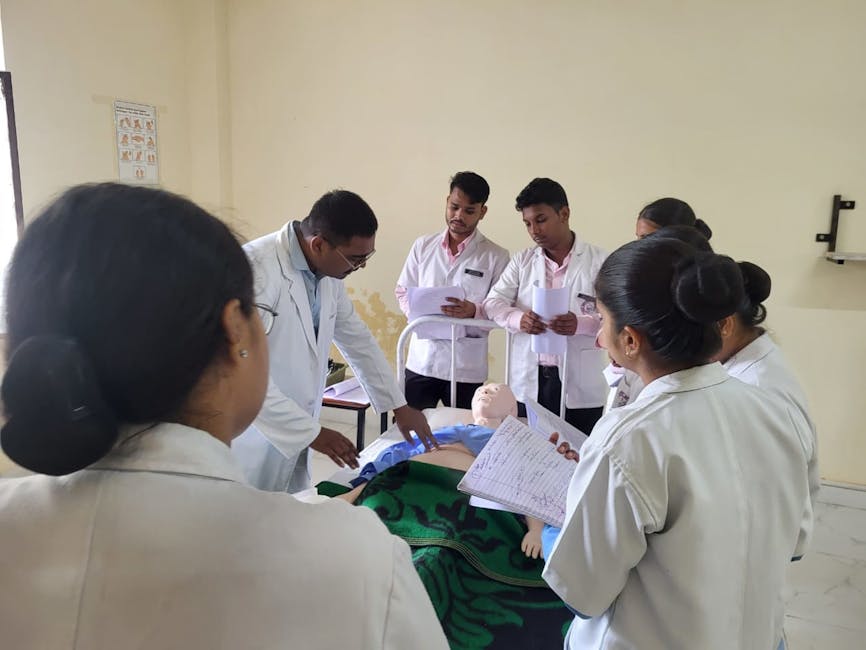
Photo: A K G Group Of Colleges / Pexels
This is the single biggest practical difference between the two destinations, and the one consultancies most often gloss over.
China is not a straightforwardly English-medium country for medicine. Only a limited set of universities are officially sanctioned to run English-taught MBBS programmes for international students — and even inside those programmes, Chinese language study is compulsory. By the clinical years you are working in Chinese hospitals, where patients, nurses and case files operate in Mandarin. Universities therefore expect working proficiency, typically benchmarked through HSK levels, before or during clinical training. Study only at NMC/WHO-listed institutions with a genuinely English-taught programme; anything effectively bilingual or Chinese-medium risks falling foul of the NMC's English-medium requirement.
The Philippines is the opposite case. English is an official language, the curriculum is delivered entirely in English, and most patients in teaching hospitals can be interviewed in English. Your history-taking, case presentations and exams all happen in the same language you will later use for the FMGE. Locals speak Filipino and regional languages among themselves, but no medical school makes them a degree requirement.
Bottom line: in the Philippines, language is a non-issue; in China, it is a serious, multi-year commitment that decides how much you actually learn in hospital.
Fees Comparison: Approximate Costs for Indian Students
Treat every figure here as an indicative range, not a quote. Fees vary widely by university and city, exchange rates move, and agents routinely circulate stale numbers. Always verify the current fee schedule on the university's official website before budgeting.
- China: Government universities charge annual tuition, with sanctioned English-track seats generally costing more than provincial averages. Hostels are usually on-campus and inexpensive. Budget extra for Mandarin/HSK coaching, insurance and residence-permit renewals. Big cities such as Beijing and Shanghai cost noticeably more to live in than provincial capitals.
- Philippines: The BS phase is typically the cheaper component; MD-phase tuition is the bigger spend. Living costs are generally low, with Manila pricier than provincial cities such as Cebu or Davao. Budget for NMAT fees, the BS-to-MD transition and visa extensions.
For most Indian students, the full-course total in either country lands broadly in the ₹25–45 lakh band — meaningfully cheaper than private MBBS seats in India, and close enough to each other that cost alone should not decide this comparison. The real financial spread comes from which university and city you choose, not which country.
FMGE Outcomes and Practising in India

Photo: Ivan S / Pexels
Whichever country you choose, the road home is identical: clear the FMGE (Foreign Medical Graduate Examination), the screening test conducted by the National Board of Examinations, then complete the required internship pathway for NMC registration. The proposed NExT exam remains deferred — FMGE is the operative exam, so plan your preparation around it.
Here is the honest read on outcomes:
- Philippines: In NBE's published results over the years, the Philippines has fielded one of the larger foreign-graduate cohorts and has generally recorded pass percentages at the better end among major destinations. The usual explanation is structural — English-medium clinical training and an exam-oriented, American-style curriculum overlap naturally with FMGE preparation.
- China: China also sends a large cohort, and results vary considerably by university. Students from strong, sanctioned English-taught programmes who invested in Mandarin — and therefore actually clerked patients — tend to fare better than those who spent clinical years observing from the back row.
Keep perspective: FMGE pass rates are low for every destination, and individual preparation matters more than geography. Start structured FMGE preparation from your first year abroad, not after graduation — our FMGE guide explains the syllabus, pattern and a realistic timeline.
Eligibility, NEET and Entrance Requirements
The Indian baseline is identical for both countries because Indian regulation sets it: NEET-UG qualification is mandatory, along with 10+2 with Physics, Chemistry and Biology and a minimum age of 17 at admission. Without NEET, no foreign medical degree can lead to registration in India.
Beyond that, the paths diverge:
- China: No separate national entrance test for foreign students, but universities screen on Class 12 PCB marks and often interview. Because sanctioned English-taught seats are limited, competitive programmes are more selective than the paperwork suggests.
- Philippines: To move from the BS phase into the MD programme, most reputable schools require the NMAT (National Medical Admission Test) — an aptitude-style exam covering verbal, quantitative and science reasoning. Students who prepared seriously for NEET generally manage it, but it is a genuine gate, not a formality, and your NMAT score influences which MD colleges accept you.
Document checklists are similar for both: NEET scorecard, Class 10 and 12 marksheets, passport, medical fitness and police clearance, plus apostille/attestation as required.
Living, Food and Culture

Photo: George Pak / Pexels
- Adjustment curve: The Philippines feels familiar faster — English signage, Western-style institutions and a warm, informal culture. China's curve is steeper: daily apps, payments and transport largely run in Chinese, though campuses are orderly and well-managed.
- Food: Both countries have sizeable Indian student communities, and Indian mess options are common near big student hubs. Vegetarian food is easier to manage in the Philippines; in smaller Chinese cities it takes planning.
- Safety: University campuses in both countries are considered safe for international students. China's on-campus hostels are the norm; in the Philippines, prefer university-recommended accommodation and take the same city-smart precautions you would in a large Indian metro.
- Climate: The Philippines is tropical year-round, with a typhoon season. China ranges from harsh northern winters to a subtropical south — pack for your specific city.
- Connectivity: Both are short-haul from India compared with Europe, with regular flight connections through major hubs.
China vs Philippines: Which Should You Choose?
Choose the Philippines if you want English from classroom to bedside, a curriculum that naturally feeds FMGE preparation, easier day-one adjustment, and you accept the BS + NMAT + MD sequence. This is the better default for the majority of Indian students weighing these two countries in 2026.
Choose China if you have secured a seat in an officially sanctioned English-taught MBBS programme at a reputable, NMC/WHO-listed university, you are honestly prepared to reach working Mandarin for clinical years, and you value large modern teaching hospitals plus the familiar direct six-year structure.
Choose neither blindly. Countries do not meet NMC criteria — specific programmes do. Compare individual universities on medium of instruction, internship arrangements and licensure eligibility, and read our detailed country guides for China and the Philippines before shortlisting.
FAQs: China vs Philippines for MBBS
Q1: Which country is better for MBBS — China or the Philippines? A: For most Indian students, the Philippines: the MD programme is fully English-medium including hospital rotations, and its exam-driven system supports FMGE preparation. China suits students in sanctioned English-taught programmes who are committed to learning Mandarin.
Q2: Is MBBS in China really taught in English? A: Only in a limited set of officially sanctioned programmes — and even there, Chinese language study is compulsory and clinical years require working Mandarin (benchmarked via HSK) because patients and hospital records are in Chinese. Confirm the medium of instruction for every year of the course in writing.
Q3: Is NEET compulsory for both countries? A: Yes. NEET-UG qualification is mandatory for any Indian student studying medicine abroad — in China, the Philippines or anywhere else — and it is required later for NMC registration in India.
Q4: Do I have to write FMGE after returning from China or the Philippines? A: Yes. Every foreign medical graduate must clear the FMGE to practise in India, regardless of destination. The proposed NExT exam remains deferred, so FMGE is the exam to prepare for — see our FMGE guide for a preparation roadmap.
Q5: What is NMAT, and does China have an equivalent? A: NMAT is the Philippines' national medical admission test, required by most schools before the MD phase. China has no equivalent national test for foreign students; universities screen applicants on Class 12 marks and interviews instead.
Q6: Why is the Philippines MBBS degree not valid in India? A: A Philippine MD degree is not automatically invalid, but the pathway causes problems. NMC rules require a single medical course of at least 54 months plus a 12-month internship at the same institution. The Philippine system adds a separate BS pre-medical stage before the MD, which NMC does not count as part of the medical course. Students on the BS+MD route have faced recognition issues, so verify NMC compliance before enrolling.
Q7: Is it worth studying MBBS in China? A: It can be, if you choose carefully. Pick only universities on China's official English-medium (MOE) list that meet NMC norms, since these offer strong infrastructure and hospitals. Total cost is approximately Rs 20-40 lakh. The main challenges are learning Mandarin for patient interaction in clinical years and clearing the FMGE after returning. Avoid bilingual or Chinese-medium programmes, which create recognition problems in India.
Q8: Why do Indians go to the Philippines to study medicine? A: Three practical reasons: the Philippines is an English-speaking country, so there is no language barrier with patients; it follows a US-style medical curriculum useful for students eyeing the USMLE; and its tropical disease profile is similar to India's, making clinical training more relevant. Costs are moderate compared with Western countries. However, Indian students must check that their chosen pathway meets NMC's course-duration and internship rules.
Q9: Is MBBS abroad better than MBBS in India? A: An Indian government MBBS seat is better than going abroad — lower cost, no screening exam, familiar clinical exposure. MBBS abroad becomes sensible when the alternative is a private Indian college charging approximately ₹60 lakh to over ₹1 crore, since reputable universities abroad can cost far less. The trade-off: foreign graduates must clear the FMGE before practising in India, so weigh a university's FMGE record before choosing.
Q10: Is MBBS easier in India or abroad? A: Getting admission is easier abroad — most universities need only NEET qualification, not a high rank. Completing the degree and practising is harder abroad: you adapt to a new country, sometimes a new language for clinical years, and must clear the FMGE on return, where pass rates have historically been modest. In India, entry is brutally competitive, but the path after admission is more straightforward.
Q11: Is MBBS in Georgia better than India? A: Not better than an Indian government seat, but Georgia is a reasonable alternative to expensive private colleges: fully English-medium six-year MBBS, a safe European setting, and approximate total costs in the ₹30–40 lakh range. The catch is the FMGE — check the recent pass performance of the specific Georgian university, and verify it against NMC requirements and the World Directory of Medical Schools before paying anything.
Q12: Is MBBS in Russia better than India? A: A government MBBS seat in India still wins on cost and licensing. Against private Indian colleges, Russia is competitive: established state medical universities, six-year courses, and approximate totals of ₹25–50 lakh depending on the city. Confirm the programme is genuinely English-medium — many shift to Russian in clinical years — check FMGE outcomes for that university, and verify it against official NMC norms before committing.
📍 Planning your MBBS in china? Our complete guide covers every NMC-approved university, real fees, FMGE pass rates and the step-by-step admission process.
Read the complete MBBS in china guide →Get Free Expert Guidance
Our FMGE-qualified counselors will help you choose the right university based on your NEET score and budget.
No spam. Your data is secure. We call during 9 AM - 8 PM IST.
Frequently Asked Questions
About the Author
Neha Tripathi
Neha Tripathi is a content writer at iAMBBS, focused on MBBS-abroad guidance for Indian students — covering NMC-approved universities, fees, FMGE, and admissions.