
Documents for MBBS Abroad: Complete Checklist for Indian Students
Neha Tripathi
Author
Share this article

Image: Alex Robert alexrobert, CC0 — via Wikimedia Commons
Q6: Which country is safest for MBBS? A: Georgia, Kazakhstan, Uzbekistan, Bangladesh and Nepal are widely considered safe choices for Indian MBBS students, with low crime rates and large, settled Indian student communities. Safety also depends on the city and university, so check the campus location, hostel security and the size of the existing Indian batch before you finalise. Avoid regions with active conflict, and register with the Indian embassy after you arrive.
Q7: Can I apply for MBBS abroad without NEET? A: No. NEET qualification is mandatory for Indian students who want to study MBBS abroad and later practise in India. The NMC requires you to have qualified NEET at the time of admission; without it, you cannot register as a doctor in India even after completing the degree and you will not be eligible for the FMGE screening exam. Some foreign universities may admit you, but the degree becomes unusable in India.
Q8: How much money is required for MBBS abroad? A: Budget approximately Rs 25-60 lakh for the full course including tuition, hostel and living costs, depending on the country. Central Asian destinations like Uzbekistan and Kyrgyzstan sit at the lower end (around Rs 20-30 lakh), Georgia and Russia in the middle, and European Union countries like Poland can cross Rs 60 lakh. Always confirm the fee structure directly with the university, as agent quotes vary. By Neha Tripathi
The documents required for MBBS abroad fall into five groups: academic records (your Class 10 and Class 12 marksheets and the NEET scorecard), passport and visa paperwork, medical and character certificates, financial proof, and apostilled or attested copies of all of the above. Most Indian students need 12 to 15 documents in total, and preparing the full set takes four to eight weeks once apostille and translation timelines are counted in. This guide lists every document, explains what each one is for, and flags the country-specific extras that routinely catch applicants off guard.
Start assembling your file the moment your Class 12 result arrives. Universities abroad admit within fixed intake windows, and a missing apostille or an expiring passport is the most common reason an otherwise strong application stalls.
MBBS Abroad Document Checklist at a Glance
Use this table as your master checklist. Each item is explained in detail in the sections that follow.
| Document | Purpose | Notes |
|---|---|---|
| Class 10 marksheet and certificate | Proof of date of birth and schooling | Apostille usually required |
| Class 12 marksheet and certificate | Proves PCB eligibility for MBBS | Apostille usually required |
| NEET scorecard | Mandatory eligibility proof under NMC rules | Valid for 3 years for admission abroad |
| Passport | Identity and international travel | Minimum 6 months validity; more is safer |
| Passport-size photographs | Visa and university forms | Follow the embassy specification exactly |
| Admission or invitation letter | Basis of the student visa application | Issued by the university |
| Visa application form | Student visa | Country-specific format |
| Medical fitness certificate | Health screening for the visa | HIV test report needed for several countries |
| Vaccination records | Immigration and hostel requirement | Carry originals |
| Police clearance certificate (PCC) | Confirms no criminal record | Issued via Passport Seva; asked for by some countries |
| Bank statements or loan sanction letter | Financial proof | Typically the last 6 months of statements |
| Migration or transfer certificate | Confirms you have left your board or school | From your school or board |
| Birth certificate | Age proof where the marksheet is not accepted | Apostille only if asked |
| Gap affidavit (if applicable) | Explains any gap year | Notarised |
| Certified translations | For non-English destinations | Russian and other languages, where required |
Core Academic Documents: Marksheets and NEET Scorecard
Your academic file is the heart of the application, because it proves you meet the eligibility rules of both the foreign university and the National Medical Commission (NMC) back home.
- Class 10 marksheet and passing certificate. Used as proof of date of birth and basic schooling. Keep the original plus several attested copies.
- Class 12 marksheet and passing certificate. This establishes that you studied Physics, Chemistry and Biology with English, and that you meet the minimum PCB percentage for NEET eligibility — 50% for General category and 40% for reserved categories.
- NEET scorecard. NEET qualification is mandatory for every Indian student taking MBBS admission abroad — no exceptions. The result remains valid for three years from declaration for admission to foreign medical universities. Preserve both the scorecard and the admit card; you will need them again during screening-test registration. Still weighing options? Our NEET college predictor and NEET cutoff guide show what is realistic at your score.
- Migration or transfer certificate. Issued by your school or board, confirming you are free to enrol elsewhere.
- Character certificate. A short conduct certificate from your school; several universities and embassies ask for it.
Planning MBBS abroad?
Get a free counselling call — we'll shortlist NMC-approved universities for your NEET score and budget.
Passport and Visa Documents for MBBS Abroad
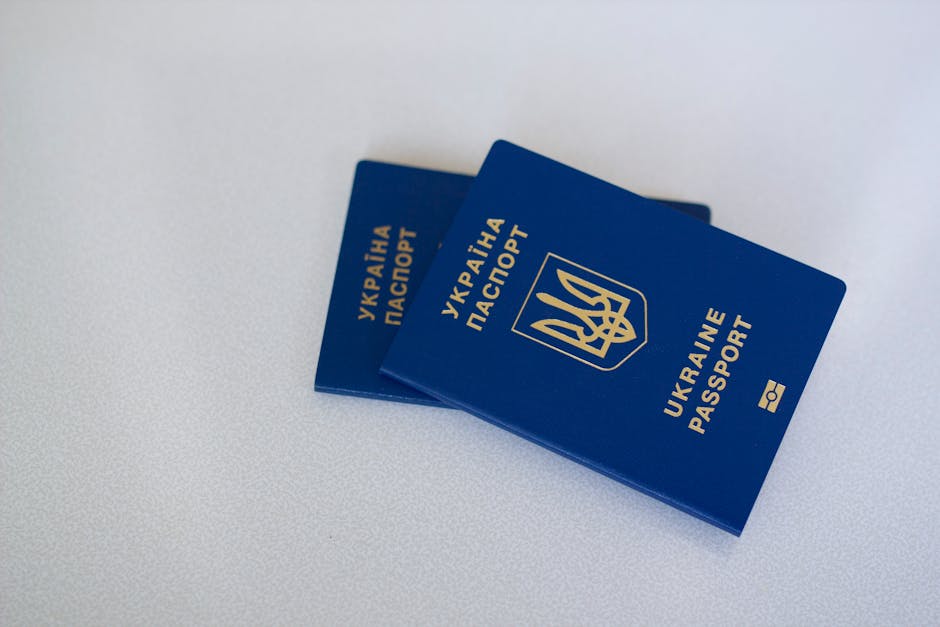
Photo: Borys Zaitsev / Pexels
Apply for your passport before your results arrive if you do not already hold one. Normal processing through Passport Seva takes time, and every subsequent step — admission, invitation letter, visa — needs the passport number.
- Valid passport with at least six months of validity beyond your travel date. Since MBBS runs five to six years, a passport with longer remaining validity saves a renewal abroad.
- Admission or invitation letter from the university. In countries such as Russia, Kazakhstan and Kyrgyzstan, an official invitation letter processed through the migration authorities is the basis of the visa itself.
- Completed visa application form in the destination country format.
- Passport-size photographs matching the exact embassy specification — size, background and age of the photo all matter.
- Proof of funds — usually parents' bank statements for the last six months, an education loan sanction letter, or both.
- Visa fee receipt and, for many countries, proof of accommodation and travel or health insurance.
Visa processing typically takes two to eight weeks depending on the country, so file as soon as the admission letter is in hand.
Medical and Other Personal Certificates
Most destination countries screen incoming students for public-health reasons.
- Medical fitness certificate from a registered practitioner, stating you are free of communicable diseases.
- HIV test report. Several countries, including Russia, require a recent negative HIV certificate with the visa file.
- Vaccination records. Carry your immunisation history; universities and hostels frequently ask for it at enrolment.
- Police clearance certificate (PCC), issued through Passport Seva, where the destination country requires it.
- Birth certificate, useful where authorities want age proof independent of the marksheet.
- Gap affidavit — a notarised statement explaining any gap between Class 12 and admission. A gap year does not disqualify you; an unexplained one invites queries.
Apostille and MEA Attestation Explained

Photo: Markus Spiske / Pexels
An apostille is an international certificate under the Hague Convention of 1961 that makes an Indian document legally valid in other member countries. India has been a member since 2005, and the Ministry of External Affairs (MEA) is the only authority in India that issues apostilles.
The chain works like this:
- Notarisation of the document where needed.
- State-level authentication by the Home or Education Department of the state that issued the document (educational documents go through the Education Department route).
- MEA apostille, applied as a sticker with a unique identification number. Since the MEA does not accept documents directly from individuals, you submit through its authorised outsourced service centres. The MEA fee is ₹50 per document, with service charges of the outsourced agency on top.
Plan for one to three weeks end to end, longer if the state authentication desk is backlogged. Two practical warnings: never laminate a document you intend to apostille — the sticker must be affixed to the paper — and check whether your destination wants the apostille on originals, on notarised copies, or both. If your destination country is not a Hague Convention member, apostille is replaced by embassy legalisation: MEA attestation followed by attestation at that country's embassy in India.
University-Specific Documents
Beyond the standard file, each university adds its own paperwork. Common items include:
- The university's own application form and fee payment proof.
- Statement of purpose or a short motivation letter, where asked.
- A signed undertaking or student agreement covering fees, conduct and hostel rules.
- Health insurance enrolment, often arranged through the university at arrival.
- Medium-of-instruction certificate from your school — most universities accept English-medium schooling in place of IELTS or TOEFL for English-taught MBBS.
Always work from the university's current published list — requirements change between intakes.
NMC Eligibility Certificate and Self-Declaration: What Changed
This is the area with the most outdated advice online, so be careful.
The Medical Council of India (MCI) was abolished in 2020 and replaced by the National Medical Commission (NMC). Under the old MCI regime, students needed a separate Eligibility Certificate before joining a foreign medical university. Under the NMC's Foreign Medical Graduate Licentiate (FMGL) Regulations 2021, that separate certificate is no longer issued — qualifying NEET-UG is itself the eligibility requirement for Indian students going abroad for MBBS.
What you must do instead is make sure your course complies with the FMGL 2021 norms, because compliance decides whether you can be licensed in India later. The regulations require, among other things, a course taught in English, of the prescribed duration including internship, at an institution that entitles you to practise in that country. Many universities and counsellors therefore ask students to sign a self-declaration confirming they have read and meet these conditions — read it carefully before signing, and keep a copy.
Remember the licensing sequence: after graduating abroad you must clear the FMGE (Foreign Medical Graduate Examination) to practise in India. FMGE remains fully operative; the proposed NExT exam is deferred and has no implementation date. Our FMGE guide explains the exam, pass rates and preparation in detail.
Country-Specific Extra Documents
Core documents stay the same everywhere, but each destination adds one or two items:
- Russia: negative HIV test report and notarised Russian translations of academic documents.
- Georgia: apostilled academic documents are standard, and enrolment is confirmed through the education ministry's recognition process.
- Kazakhstan and Kyrgyzstan: an official invitation letter for the visa, plus notarised translations where documents are processed in Russian.
- Bangladesh: an equivalence certificate for your Class 12 qualification from the designated authority.
- Philippines: a certificate of good moral character, and an NMAT score where the university requires it for the medicine programme.
Check the current embassy checklist for your intake year — health and translation rules are the items that change most often.
Common Documentation Mistakes to Avoid
- Laminating originals. Apostille stickers cannot be affixed to laminated paper.
- Name mismatches. The spelling on your passport, marksheets and NEET scorecard must match exactly; fix discrepancies before applying, not after.
- Leaving apostille to the last week. State authentication queues are unpredictable.
- Uncertified translations. Only certified or notarised translations are accepted; a self-made translation will be rejected.
- Single copies. Keep at least two attested physical sets and a complete scanned PDF set in cloud storage.
- Expired or short-validity passports. Renew before you fly if validity is tight.
- Ignoring photo specifications. Embassies reject files over wrong photo dimensions surprisingly often.
- Signing declarations unread. Understand the FMGL 2021 conditions you are declaring compliance with.
FAQs
Q1: Is apostille required for MBBS abroad? A: Yes, for destinations that are Hague Convention members — which includes most popular MBBS countries. The MEA is India's sole apostille authority. For non-member countries, embassy legalisation applies instead.
Q2: Do I need a NEET scorecard for MBBS abroad? A: Yes. NEET qualification is mandatory for every Indian student joining MBBS abroad, and the scorecard is a core document in your file. The result stays valid for three years for foreign admission.
Q3: Is the MCI Eligibility Certificate still required? A: No. The MCI was abolished in 2020 and the NMC's FMGL Regulations 2021 removed the separate Eligibility Certificate — qualifying NEET-UG now establishes eligibility. Ensure your course itself meets FMGL norms.
Q4: Which documents need translation? A: Any document not in English — and, for some destinations such as Russia, documents may need certified translation into the local language. Always use a certified translator and keep the translator's certification attached.
Q5: Do I need a police clearance certificate? A: Some countries ask for a PCC with the visa file and others do not. It is issued through Passport Seva against your passport, so factor in a couple of weeks if your destination requires it.
Final Word
Documentation is the one part of the MBBS abroad process entirely in your control. Build the file early, apostille in good time, keep multiple copies, and verify every item against the university's and embassy's current lists — the paperwork then becomes a formality, leaving you free to prepare for the years ahead and the FMGE at the end of them.
Get Free Expert Guidance
Our FMGE-qualified counselors will help you choose the right university based on your NEET score and budget.
No spam. Your data is secure. We call during 9 AM - 8 PM IST.
Frequently Asked Questions
About the Author
Neha Tripathi
Neha Tripathi is a content writer at iAMBBS, focused on MBBS-abroad guidance for Indian students — covering NMC-approved universities, fees, FMGE, and admissions.