
MBBS in Malaysia for Indian Students 2026: Fees, NEET & Top Colleges
Neha Tripathi
Author
Share this article
Yes, Indian students can study MBBS in Malaysia — and for the right student, it is genuinely worth it. Malaysia offers five-year, fully English-medium MBBS programmes at universities listed in the World Directory of Medical Schools (WDOMS), and graduates can practise in India after clearing the FMGE, provided the NMC's 2021 foreign-degree criteria are met. The honest catch: Malaysia is one of the costlier Asian destinations — total costs typically work out to roughly ₹60 lakh to ₹1.2 crore — so it suits students who value English-speaking clinical training, safety and proximity to India over the lowest possible fee.
🩺 Confused about MBBS abroad? Book free counselling with our experts, find colleges for your NEET score with the MBBS College Predictor, or calculate your total cost.
Why Indian Students Consider Malaysia for MBBS
Malaysia sits in a middle lane that many families find comfortable. Teaching is entirely in English — not just in the classroom but in hospital wards, where a large share of patients also speak English. The country is a 4–5.5 hour direct flight from most Indian metros, vegetarian and Indian food is everywhere (roughly 7% of Malaysians are of Indian origin), and Kuala Lumpur consistently ranks among Asia's safer, more liveable student cities.
Academically, Malaysian medical programmes are regulated twice over: the Malaysian Qualifications Agency (MQA) accredits the degree, and the Malaysian Medical Council (MMC) recognises it for practice in Malaysia. That dual layer of local accountability is something several cheaper MBBS destinations simply do not have.
The trade-off is price. If your budget is under ₹40 lakh, Malaysia will frustrate you — we say that upfront so you can compare it fairly with other MBBS destinations before shortlisting.
Eligibility for MBBS in Malaysia: NEET Is Mandatory

Photo: Yusuf Çelik / Pexels
For Indian students, the 2026-intake eligibility checklist looks like this:
- NEET qualification is compulsory. Under NMC rules, every Indian student going abroad for medicine must have qualified NEET-UG. Without it, you cannot register to practise in India later — no matter which university you attend.
- 10+2 with Physics, Chemistry and Biology, generally with at least 50% aggregate in PCB. In practice, most Malaysian medical faculties ask for considerably more — strong marks in all three science subjects are the norm at competitive private universities.
- Minimum age of 17 years by 31 December of the admission year.
- English proficiency. Requirements vary by university — some accept strong Class 12 English marks, others ask for IELTS, TOEFL or MUET scores. Check the specific university's current policy.
Malaysian universities screen genuinely: medical seats are capped by the government and interviews are common at the better institutions. Treat the application as a real selection process, not a formality.
Planning MBBS abroad?
Get a free counselling call — we'll shortlist NMC-approved universities for your NEET score and budget.
MBBS in Malaysia Fees & Total Cost (2026)
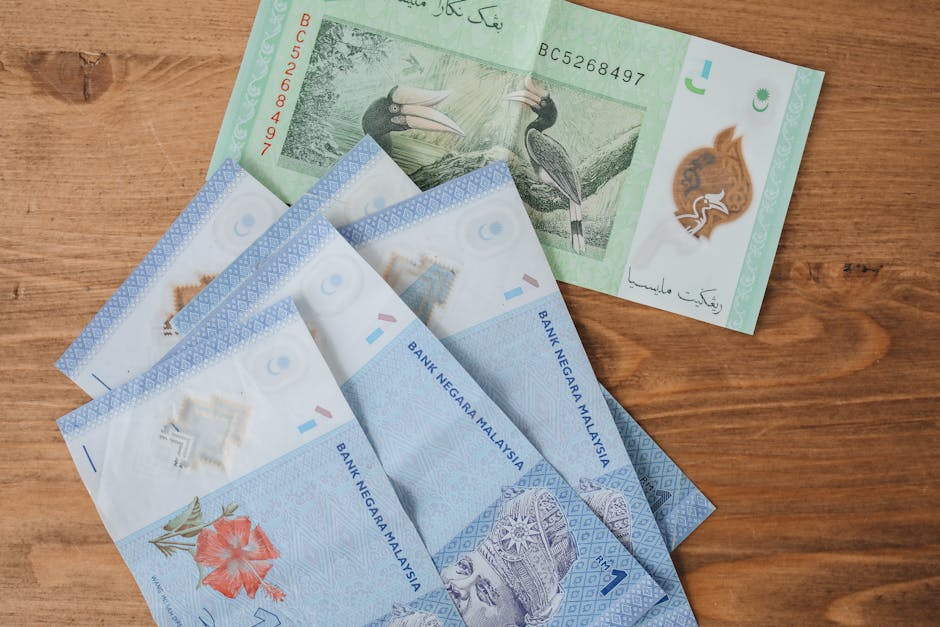
Photo: Polina Tankilevitch / Pexels
Let's be direct: Malaysia is a mid-to-premium destination, not a budget one. Tuition at private Malaysian medical schools generally falls between RM 300,000 and RM 600,000 for the full programme, and the ringgit's strength against the rupee pushes several top private universities past the ₹1 crore mark all-in.
| Cost head | Indicative range (2026) | In rupees (approx.) |
|---|---|---|
| Total tuition (5 years, private university) | RM 300,000 – RM 600,000 | ₹58 lakh – ₹1.2 crore |
| Hostel / rent | RM 500 – 1,500 per month | ₹10,000 – ₹30,000 per month |
| Food and daily living | RM 1,000 – 1,500 per month | ₹19,000 – ₹30,000 per month |
| Student pass (EMGS), insurance, renewals | Varies by university and year | Budget separately |
| Flights home | 4–5.5 hr direct routes | Fares vary by season |
Fees change every intake and differ sharply between universities — always verify the current fee schedule on the university's official page before paying anything. Rupee figures use an indicative RM 1 ≈ ₹19–20; check the live rate.
Public universities (Universiti Malaya, UKM, USM, UPM) charge less than private ones, but their international MBBS seats are extremely limited and fiercely competitive — most Indian students realistically choose among the private universities.
Course Duration & Structure: Twinning vs Full Local MBBS
The Malaysian MBBS is a five-year programme: two pre-clinical years (anatomy, physiology, biochemistry, pathology, pharmacology, microbiology) followed by three clinical years rotating through medicine, surgery, obstetrics & gynaecology, paediatrics and psychiatry in teaching hospitals.
You will encounter two structural routes:
- Full local MBBS: all five years in Malaysia. This is the cleanest option for students planning to return to India, because the entire degree — including clinical training — comes from a single WDOMS-listed institution.
- Twinning / credit-transfer programmes: some universities (IMU is the best-known example) let students complete the early years in Malaysia and transfer to a partner medical school abroad for the clinical phase. Twinning can be attractive, but if India is your end goal, scrutinise how the final degree is awarded and whether it satisfies the NMC's criteria — and get the answer from the university in writing before you enrol.
Graduates who stay on in Malaysia complete a two-year housemanship before full registration there. If you are returning to India, your path runs through the FMGE instead — details next.
NMC & FMGE Recognition: Can You Practise in India?
Yes — foreign medical graduates register in India every year, and Malaysian degrees are eligible when the rules are followed. Three things matter:
- The NMC does not keep an "approved list" of foreign universities. Under the Foreign Medical Graduate Licentiate (FMGL) Regulations 2021, what matters is that your degree meets the criteria: minimum 54 months of study, English medium, a university listed in the World Directory of Medical Schools, and eligibility for registration to practise in the country that awarded the degree. Verify all four for any Malaysian university you shortlist — and be wary of agents flashing outdated "MCI-approved" lists. The MCI was abolished in 2020 and replaced by the NMC.
- You must clear the FMGE (Foreign Medical Graduate Examination) for provisional registration in India. The FMGE is a genuinely tough screening exam, and clearing it depends far more on how seriously you study for five years than on which country you studied in. Read our FMGE guide before you even pick a destination — it will change how you evaluate universities.
- NExT has not replaced the FMGE. The National Exit Test remains deferred; the FMGE is still the operative licensing exam in 2026. Plan for the FMGE; prepare for NExT only if and when it is officially notified.
After clearing the FMGE, you complete internship or supervised training in India as per prevailing NMC norms, then apply for registration.
Top Medical Universities in Malaysia for Indian Students

Photo: Dr. John Taskinsoy / Pexels
These are established, WDOMS-listed Malaysian institutions that Indian students most commonly consider. Public universities appear for completeness, but their international MBBS intake is tiny.
| University | Location | Type | Worth knowing |
|---|---|---|---|
| International Medical University (IMU) | Kuala Lumpur | Private | Malaysia's first private medical school; full local MBBS plus credit-transfer (twinning) routes |
| Manipal University College Malaysia (formerly Melaka Manipal / MMMC) | Melaka | Private | Part of the Manipal group; long the most popular choice among Indian students |
| AIMST University | Kedah | Private | Founded with strong Malaysian-Indian community backing; sizeable Indian student presence |
| Management & Science University (MSU) | Shah Alam | Private | Practice-oriented MBBS with its own medical centre |
| UCSI University | Kuala Lumpur (clinical years in Kuala Terengganu) | Private | Strongly ranked private university; medicine is its flagship health programme |
| Taylor's University | Subang Jaya | Private | Highly ranked private university with modern facilities |
| SEGi University | Kota Damansara | Private | Comparatively accessible entry point among established players |
| Universiti Malaya (UM) | Kuala Lumpur | Public | Malaysia's oldest, highest-ranked university; very limited international seats |
Browse detailed profiles, fee data and admission requirements on our Malaysia country page and in our full university directory.
How to Apply: 2026 Intake in Six Steps
- Shortlist 3–4 universities against your NEET score, PCB marks and budget.
- Apply online with transcripts, NEET scorecard, passport and photographs; pay the application fee.
- Clear the university's screening — many conduct interviews or entrance assessments.
- Accept the offer and pay the initial deposit to lock your seat.
- Student pass (visa): the university files your application through EMGS (Education Malaysia Global Services); you complete a medical screening.
- Fly, enrol, attend orientation. Starting 8–12 months early avoids last-minute panic.
Pros & Cons of MBBS in Malaysia
Pros
- True English-medium ecosystem — classroom, hospital wards and daily life
- Strong domestic regulation (MQA + MMC) and WDOMS-listed universities
- Safe, modern, multicultural cities with a large Indian-origin community
- Short, affordable flights home; familiar food culture eases homesickness
- Clinical exposure in well-run government and private teaching hospitals
Cons
- Cost: often 1.5–3× the total cost of Russia or Central Asia
- Very few public-university seats for internationals — you are mostly choosing among private universities
- Selective admissions: a bare 50% in PCB with a borderline NEET score will not open the better doors
- Tropical climate and distance from family
Malaysia vs Cheaper MBBS Destinations: An Honest Comparison
| Factor | Malaysia | Russia | Uzbekistan / Kazakhstan | Philippines |
|---|---|---|---|---|
| Typical total cost | ₹60L – ₹1.2Cr | ₹30L – ₹60L | ₹25L – ₹45L | ₹35L – ₹60L |
| Medium of instruction | English throughout | English (Russian needed with patients) | English (local language with patients) | English |
| Ward-level patient communication | Largely manageable in English | Russian essential | Local language needed | Manageable in English |
| Cultural adjustment | Easy — large Indian diaspora | Harder | Moderate | Easy |
| Direct flight time from India | 4–5.5 hrs | 6–10 hrs | 3–5 hrs | 7–9 hrs |
The pattern is clear: in Malaysia you pay a premium mainly for English-language clinical training and quality of life. If budget is the binding constraint, Russia or Central Asia can deliver an NMC-compliant degree for far less — compare options in our university directory. If your family can fund Malaysia comfortably, ward-level English exposure is a real advantage when you sit the FMGE and, later, when you practise.
Watch: MBBS Abroad 2026 — NMC Rules & Complete Guide
FAQs: MBBS in Malaysia for Indian Students
Q1: Is NEET compulsory for MBBS in Malaysia? A: Yes. NEET-UG qualification is mandatory for every Indian student pursuing medicine abroad, including Malaysia. Without it, you cannot register to practise in India after graduation.
Q2: How much does MBBS in Malaysia cost in total? A: Private-university tuition typically runs RM 300,000–600,000 (roughly ₹58 lakh–₹1.2 crore) for the full five years, plus living costs of about RM 1,500–3,000 a month. Exact fees vary by university and intake — always confirm on the official fee schedule.
Q3: Can I practise in India after MBBS from Malaysia? A: Yes, provided your degree meets the NMC's FMGL Regulations 2021 criteria (54+ months, English medium, WDOMS-listed university, local registration eligibility) and you clear the FMGE, followed by internship as per NMC norms.
Q4: Is MBBS in Malaysia better than Russia for Indian students? A: It depends on budget and priorities. Malaysia costs significantly more but offers English at ward level, easier cultural adjustment and shorter flights. Russia is far cheaper but requires Russian for patient interaction. Both routes can lead to Indian registration via the FMGE.
Q5: What is the duration of MBBS in Malaysia? A: Five years of study. Graduates staying in Malaysia then do a two-year housemanship; those returning to India take the FMGE and complete internship requirements in India instead.
Written by Neha Tripathi for iAMBBS. Fee figures are indicative ranges as of the 2026 intake — always verify current fees and admission criteria on the university's official website before applying.
📍 Planning your MBBS in malaysia? Our complete guide covers every NMC-approved university, real fees, FMGE pass rates and the step-by-step admission process.
Read the complete MBBS in malaysia guide →Get Free Expert Guidance
Our FMGE-qualified counselors will help you choose the right university based on your NEET score and budget.
No spam. Your data is secure. We call during 9 AM - 8 PM IST.
Frequently Asked Questions
Related Topics
About the Author
Neha Tripathi
Neha Tripathi is a content writer at iAMBBS, focused on MBBS-abroad guidance for Indian students — covering NMC-approved universities, fees, FMGE, and admissions.