
MBBS in the Philippines 2026: Guide & Top Universities
Neha Tripathi
Author
Share this article
Are you an Indian student dreaming of becoming a doctor but struggling with the intense competition for medical seats in India? The Philippines might be your perfect solution. With over 37 NMC-approved medical universities, affordable fees, and English-medium instruction, the Philippines has become one of the most sought-after destinations for Indian students pursuing MBBS abroad.
In this , we'll explore everything you need to know about studying MBBS in the Philippines in 2026, from eligibility criteria to career prospects after graduation.
🩺 Confused about MBBS abroad? Book free counselling with our experts, find colleges for your NEET score with the MBBS College Predictor, or calculate your total cost.
Quick Overview: MBBS in Philippines
| Parameter | Details |
|---|---|
| Total NMC-Approved Universities | 37+ medical colleges |
| Course Duration | 6-6.5 years (BS + MD + Internship) |
| Total Course Fee | Rs 15-35 lakhs (entire course) |
| Annual Tuition Fee | Rs 2-6 lakhs per year |
| Medium of Instruction | English |
| NEET Requirement | Mandatory (50th percentile for General) |
| FMGE Pass Rate | 26-30% (Higher than many countries) |
| Living Cost | Rs 10,000-30,000 per month |
| Recognition | NMC, WHO, ECFMG, WFME approved |
| Course Pattern | American/US-based curriculum |
| Entrance Test | NMAT (National Medical Admission Test) |
| Climate | Tropical (23-32°C year-round) |
Why Study MBBS in Philippines?
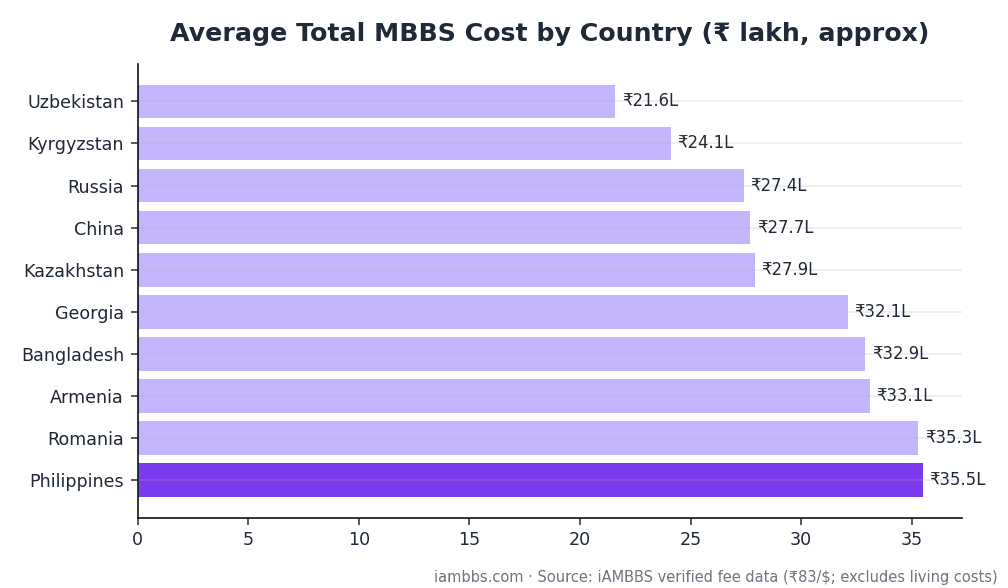
The Philippines has emerged as a premier destination for Indian medical students, and here's why:
1. English-Medium Education
The Philippines is the largest English-speaking country in Asia. All medical programs are taught entirely in English, eliminating language barriers that students might face in countries like Russia, China, or other non-English speaking countries). This gives Indian students a significant advantage as they can focus entirely on their medical education without spending time learning a new language.
2. American/US-Based Curriculum
Medical education in the Philippines follows the American pattern, which is recognized globally. This curriculum structure prepares students not just for Indian medical licensing exams (FMGE/NEXT) but also for prestigious international exams like USMLE (United States Medical Licensing Examination).
According to recent data, the percentage of Philippines medical graduates clearing the USMLE exam is significantly higher than medical students graduating from most other countries. This opens doors to medical practice in the USA, UAE, Israel, New Zealand, and other developed nations.
3. High FMGE Pass Rate
One of the most critical factors for Indian students is the FMGE (Foreign Medical Graduate Examination) pass rate. The Philippines consistently maintains a strong performance:
- Overall FMGE Pass Rate: 26-30%
- Historical Performance (2012-2023): Out of 29,138 students who appeared for FMGE, 7,773 passed, resulting in a 26.67% pass rate
- Recent Data (2022): Out of 8,746 Indian graduates from the Philippines, 2,366 cleared FMGE (approximately 27%)
This pass rate is significantly higher than many other popular MBBS abroad destinations, validating the quality of medical education in the Philippines.
4. Affordable Fee Structure
Compared to private medical colleges in India (which charge Rs 50 lakhs to Rs 1 crore), the Philippines offers quality medical education at a fraction of the cost. The total course fee ranges from Rs 15-35 lakhs for the entire 6-year program, making it accessible for middle-class Indian families.
5. No Donation or Capitation Fees
Unlike many private medical colleges in India, admission to Philippine medical universities is merit-based and does not require any donation or capitation fees. Students are admitted based on their NEET scores and academic performance.
6. Clinical Exposure and Practical Training
Philippine medical universities emphasize hands-on clinical training. Students get extensive exposure to patient care during their clinical rotations (clerkship) in affiliated hospitals. The final year involves 48 weeks of clinical practice across various departments, providing real-world medical experience.
7. Cultural Similarities
The Philippines shares several cultural similarities with India:
- Warm, tropical climate similar to India
- Hospitable and friendly people
- Similar range of infections and diseases, making clinical training more relevant
- Large Indian student community providing a support network
- Easy availability of Indian food in hostels and restaurants
8. Global Recognition
Medical degrees from NMC-approved Philippine universities are recognized by:
- National Medical Commission (NMC), India
- World Health Organization (WHO)
- Educational Commission for Foreign Medical Graduates (ECFMG)
- World Federation for Medical Education (WFME)
- Medical councils of various countries
9. Safe Environment
The Philippines maintains a safety index of 60, making it a secure destination for international students. Medical universities provide:
- Separate hostels for male and female students
- 24/7 CCTV surveillance
- Campus security personnel
- Female-dominated society with low crime rates
10. No IELTS/TOEFL Requirement
Since the Philippines is an English-speaking country and instruction is in English, Indian students do not need to clear IELTS or TOEFL exams for admission.
Planning MBBS abroad?
Get a free counselling call — we'll shortlist NMC-approved universities for your NEET score and budget.
Eligibility Criteria for MBBS in Philippines 2026
To pursue MBBS in the Philippines, Indian students must meet the following eligibility requirements:
Academic Qualifications
For General Category:
- Completion of Class 12 with Physics, Chemistry, and Biology as compulsory subjects
- Minimum 50% aggregate marks in PCB subjects
- Board: CBSE, ICSE, or any equivalent state board
For Reserved Categories (SC/ST/OBC):
- Same subjects: Physics, Chemistry, Biology
- Minimum 40% aggregate marks in PCB subjects
NEET Requirement
Mandatory Qualification:
- NEET qualification is compulsory for all Indian students
- Minimum passing percentile: 50th percentile for General category (213 marks)
- Minimum passing percentile: 40th percentile for SC/ST/OBC categories (177 marks)
- Cut-off score: 213 marks for General, 177 marks for reserved categories
Important Note: While Philippine universities do not require NEET scores for admission, NEET qualification is mandatory as per NMC regulations for Indian students who wish to practice medicine in India after graduation.
Age Requirement
- Minimum age: 17 years as on December 31st of the admission year
- Maximum age: 25 years (though there is no strict upper age limit, younger candidates have better prospects)
Other Requirements
- Valid passport with minimum 18 months validity
- Medical fitness certificate
- Police clearance certificate (for visa purposes)
- Financially capable of supporting education and living expenses
Top NMC-Approved Medical Universities in Philippines
The Philippines houses 37+ NMC and WHO-approved medical universities. Here are the top institutions for Indian students in 2026:
Comparison Table: Top Medical Universities
| University Name | World Rating | Annual Fee (Approx) | Total Fee | Key Features |
|---|---|---|---|---|
| UV Gullas College of Medicine | 4.9 Stars (Rank #3) | Rs 2.8 lakhs | Rs 13.17 lakhs | Modern infrastructure, Indian food, excellent hostel facilities |
| University of Perpetual Help System DALTA | 3.5 Stars (Rank #9) | Rs 3-4 lakhs | Rs 18-24 lakhs | Strong clinical training, US-pattern curriculum |
| Davao Medical School Foundation | 4.2 Stars (Rank #6) | Rs 3-5 lakhs | Rs 18-30 lakhs | Indian chefs, advanced labs, high FMGE success rate |
| Our Lady of Fatima University | 4.0 Stars | USD 6,000/year | USD 38,000 | Established 1967, multiple campuses, affordable fees |
| AMA School of Medicine | 4.0 Stars | Rs 3-5 lakhs | Rs 18-30 lakhs | Modern facilities, strong faculty, good patient exposure |
| Liceo College of Medicine | 3.8 Stars | Rs 2.5-4 lakhs | Rs 15-24 lakhs | Affordable fees, quality education |
| Manila Central University | 3.7 Stars | Rs 3-5 lakhs | Rs 18-30 lakhs | Central location, good clinical exposure |
| Southwestern University PHINMA | 4.1 Stars | Rs 3-5 lakhs | Rs 18-30 lakhs | Well-established, modern curriculum |
| University of Santo Tomas | 4.5 Stars | Rs 4-6 lakhs | Rs 24-36 lakhs | Oldest university, premium education |
| Cebu Institute of Medicine | 3.9 Stars | Rs 3-5 lakhs | Rs 18-30 lakhs | Quality education, good infrastructure |
Detailed University Profiles
1. UV Gullas College of Medicine
Location: Cebu City Established: 1919 Ranking: 3rd among Philippine medical colleges
Key Highlights:
- Ultra-modern hostel facilities with AC rooms
- Indian food prepared by Indian chefs (veg, non-veg, Jain options)
- State-of-the-art laboratories and simulation centers
- Strong emphasis on practical training
- High FMGE pass rate among graduates
Fee Structure:
- Annual fee: Rs 2.8 lakhs
- Total MD program: Rs 13.17 lakhs (4.8 years + 1 year clinical rotation)
2. Davao Medical School Foundation (DMSF)
Location: Davao City Established: 1976 Ranking: 6th in the Philippines
Key Highlights:
- Separate, safe hostels for men and women
- Indian chefs providing nutritious Indian food
- Advanced medical equipment and technology
- Affiliated with major hospitals for clinical training
- Strong track record of USMLE success
Facilities:
- In-campus AC hostels
- 24/7 CCTV surveillance
- Well-equipped libraries
- Modern laboratories
3. University of Perpetual Help System DALTA
Location: Las Pinas City, Metro Manila Established: 1975 Ranking: 9th in the Philippines
Key Highlights:
- Follows American medical education system
- Strong clinical exposure through affiliated hospitals
- Experienced international faculty
- Modern campus infrastructure
Recognition:
- NMC approved
- WHO listed
- ECFMG recognized
4. Our Lady of Fatima University
Location: Multiple campuses (Valenzuela City, Quezon City, Antipolo, Pampanga) Established: 1967 Former Name: Fatima Medical Science Foundation (FMSFI)
Key Highlights:
- No donation or entrance exam required for admission
- Affordable fee structure
- Multiple campuses offering flexibility
- BS-MD program with comprehensive training
Fee Structure:
- Annual tuition: USD 6,000 (Rs 5 lakhs approx)
- Total program: USD 38,000 (Rs 31 lakhs approx)
- Hostel: USD 1,000-1,800 per year
Fee Structure and Cost Breakdown
Understanding the complete cost of studying MBBS in the Philippines is for financial planning. Here's a comprehensive breakdown:
Tuition Fees
| Cost Component | Range (Annual) | Range (Total Course) |
|---|---|---|
| Tuition Fee | Rs 2-6 lakhs/year | Rs 15-35 lakhs (6 years) |
| BS Course (Pre-Medical) | Rs 1.5-3 lakhs | Rs 3-6 lakhs (2 years) |
| MD Course | Rs 2-6 lakhs/year | Rs 10-28 lakhs (4-4.5 years) |
Living Expenses
| Expense Category | Monthly Cost | Annual Cost |
|---|---|---|
| Accommodation (Hostel) | Rs 8,000-15,000 | Rs 96,000-1,80,000 |
| Food | Rs 5,000-12,000 | Rs 60,000-1,44,000 |
| Transportation | Rs 1,000-3,000 | Rs 12,000-36,000 |
| Books & Study Materials | Rs 2,000-5,000 | Rs 24,000-60,000 |
| Personal Expenses | Rs 2,000-5,000 | Rs 24,000-60,000 |
| Total Living Cost | Rs 18,000-30,000 | Rs 2,16,000-4,80,000 |
Additional Fees
| Fee Type | Amount |
|---|---|
| Library Fee | Rs 10,000-20,000/year |
| Laboratory Fee | Rs 20,000-30,000/year |
| Student Visa Fee | Rs 22,350 (one-time) |
| Medical Insurance | Rs 15,000-25,000/year |
| Airfare (Round Trip) | Rs 25,000-40,000/year |
Total Estimated Cost
Complete 6-Year MBBS Program:
- Low-end Estimate: Rs 20-25 lakhs (tuition + living + other expenses)
- Mid-range Estimate: Rs 28-35 lakhs
- High-end Estimate: Rs 35-45 lakhs (premium universities)
Comparison with India:
- Private Medical College in India: Rs 50 lakhs - Rs 1 crore
- Savings by studying in Philippines: Rs 20-50 lakhs
Cost-Saving Tips
- Choose affordable universities like Liceo College of Medicine or UV Gullas
- Opt for shared accommodation to reduce hostel costs
- Cook occasionally to supplement hostel food and save money
- Use public transportation instead of private taxis
- Buy second-hand books from seniors
- Plan travel during off-peak seasons for cheaper airfare
Course Structure and Syllabus
The medical education system in the Philippines follows a unique BS-MD pattern based on the American curriculum. Understanding this structure is for prospective students.
Overall Program Structure
Total Duration: 6-6.5 years
- Bachelor of Science (BS) - Pre-Medical Course: 1.5-2 years
- Doctor of Medicine (MD) - Main Medical Course: 4-4.5 years
- Internship/Clerkship - Clinical Practice: 1 year
Note: Students who already hold a Bachelor's degree can directly join the MD program, reducing the total duration to 5 years.
Pre-Medical Course (BS) - 1.5 to 2 Years
The BS course is a foundation program mandated by the Commission of Higher Education (CHED) of the Philippines.
Minimum Duration: 12 months (as per CHED regulations) Typical Duration: 1.5-2 years (4 semesters)
Subjects Covered:
- General Biology
- Organic Chemistry
- Biochemistry
- General Psychology
- Physics
- Mathematics
- English Communication
- Social Sciences
Purpose:
- Provides foundational knowledge for medical studies
- Prepares students for the NMAT exam
- Builds scientific thinking and analytical skills
NMAT Examination
After completing the BS course, students must clear the NMAT (National Medical Admission Test), which is a mandatory entrance exam for all medical schools in the Philippines.
Exam Details:
- Conducted by: Center for Educational Measurement (CEM)
- Required for: Admission to MD program
- Test Format: Multiple-choice questions
- Subjects: Mental ability, Perceptual acuity, Quantitative ability
Doctor of Medicine (MD) - 4 to 4.5 Years
The MD program is the core medical course, equivalent to MBBS in India.
Recent NMC Compliance (2025-2026): To meet NMC's 54-month requirement, many Philippine universities have restructured their programs:
- BS duration: Reduced to 1 year
- MD duration: Increased to 4.5 years
Year-wise Curriculum
First Year MD (Basic Sciences):
- Gross Anatomy
- Microscopic Anatomy (Histology)
- Embryology
- Physiology
- Biochemistry
- Cell Biology
- Medical Microbiology
Second Year MD (Pre-Clinical Sciences):
- Pathology
- Pharmacology
- Medical Microbiology and Parasitology
- Behavioral Sciences
- Community Medicine
- Medical Ethics
- Introduction to Clinical Medicine
Third Year MD (Clinical Sciences - Theory):
- Internal Medicine
- Surgery
- Pediatrics
- Obstetrics and Gynecology
- Psychiatry
- Ophthalmology
- Otolaryngology (ENT)
- Orthopedics
- Anesthesiology
Fourth Year MD (Clinical Clerkship/Rotation): This is the most year where students work in hospitals under supervision.
Clinical Rotations (48 weeks):
- Internal Medicine: 12 weeks
- Surgery: 12 weeks
- Pediatrics: 8 weeks
- Obstetrics & Gynecology: 8 weeks
- Psychiatry: 4 weeks
- Community Medicine: 4 weeks
Clinical Experience:
- Direct patient interaction
- Case presentations
- Practical procedures
- Emergency care exposure
- Operating room assistance
- Patient history taking and examination
Internship - 1 Year
A compulsory 12-month internship in general medicine and surgery is required from the same medical college/affiliated hospital.
NMC Requirement:
- Minimum 12 months internship mandatory
- Must be completed at the same Philippine medical college
- Necessary for FMGE/NEXT eligibility
Assessment and Evaluation
Evaluation Methods:
- Periodic examinations
- Practical assessments
- Clinical case presentations
- OSCE (Objective Structured Clinical Examination)
- Final board examinations
Teaching Methodology
Philippine medical universities employ modern teaching methods:
- Traditional lectures
- Problem-based learning (PBL)
- Small group discussions
- Simulation-based training
- Cadaver dissection
- Virtual anatomy labs
- Clinical case studies
- Research projects
Admission Process and Timeline for 2026
Getting admission to a Philippine medical university involves several steps. Here's a complete roadmap:
Step-by-Step Admission Process
Step 1: Eligibility Check (March-April 2026)
- Verify Class 12 marksheet (50% in PCB for General)
- Confirm NEET qualification
- Ensure age requirement (17 years by Dec 31, 2026)
- Check passport validity (minimum 18 months)
Step 2: University Selection (April-May 2026)
- Research NMC-approved universities
- Compare fee structures
- Check university rankings and facilities
- Read student reviews and FMGE success rates
- Shortlist 3-5 universities
Step 3: Application Submission (May-November 2026)
Documents Required:
- Filled application form (online)
- NEET scorecard (scanned copy)
- Class 10 marksheet and certificate
- Class 12 marksheet and certificate
- Birth certificate
- Valid passport (scanned copy)
- Passport-size photographs (white background)
- Medical fitness certificate
- Police clearance certificate (for visa)
Application Process:
- Visit the university's official website or authorized representative
- Fill the online application form
- Upload scanned documents
- Pay application fee (if applicable)
- Submit the form
Step 4: Offer Letter (June-December 2026)
- Universities review applications (usually within 2-4 weeks)
- Eligible students receive provisional admission letter/offer letter via email
- Offer letter contains:
- Student details
- Course information
- Fee structure
- Admission confirmation
Last Date of Application: December 2026 (varies by university)
Step 5: Fee Payment (Upon Receiving Offer Letter)
- Pay initial fee as mentioned in the offer letter
- Typically includes:
- Processing charges
- Payment modes: Bank transfer, demand draft, or online payment
- Keep payment receipts safe
Step 6: Visa Application (1-2 Months Before Departure)
Required Documents for Student Visa (9F Visa):
- Original admission letter from university
- Valid passport with 6 months minimum validity
- Filled visa application form
- Recent passport-size photographs
- Birth certificate
- Class 12 and 10 marksheets
- NEET scorecard
- Medical fitness certificate
- Police clearance certificate
- Proof of financial capability
- Visa fee payment receipt
Visa Process:
- Submit documents to Embassy of the Philippines in India
- Visa fee: Approximately Rs 22,350 (PHP 15,000)
- Processing time: 2-4 weeks
- Locations: New Delhi, Mumbai, Chennai (Philippine Embassy/Consulate)
Step 7: Pre-Departure Preparation (July-August 2026)
Medical Preparations:
- Complete vaccination requirements
- Get medical insurance
- Carry medical prescriptions (if on medication)
Travel Arrangements:
- Book flight tickets (check university start date)
- Arrange airport pickup (many universities provide this service)
- Pack appropriate clothing for tropical climate
Financial Arrangements:
- Open international debit/credit card
- Carry initial cash in USD or Philippine Peso
- Set up international money transfer facility
Documents to Carry:
- Original passport with visa
- All original educational documents
- Multiple copies of all documents
- Admission letter
- Fee payment receipts
- Medical certificates
- Passport-size photographs (extra)
Step 8: Arrival and Registration (August-September 2026)
Upon Arrival in Philippines:
- University representatives receive students at airport
- Transport to hostel/accommodation
- Hostel check-in and room allocation
University Registration:
- Submit original documents for verification
- Complete university registration formalities
- Pay remaining fees (if any)
- Receive student ID card
- Attend orientation program
Immigration Formalities:
- Register with Bureau of Immigration within 60 days
- Apply for ACR I-Card (Alien Certificate of Registration)
- Complete medical examination in Philippines
Step 9: Commencement of Classes (September-October 2026)
- BS course begins
- Receive timetable and course materials
- Get library access
- Attend introductory lectures
Academic Timeline
| Month | Activity |
|---|---|
| March-April 2026 | Eligibility verification, NEET qualification |
| May-June 2026 | University research and application |
| June-November 2026 | Application submission to universities |
| July-December 2026 | Offer letters received |
| July-December 2026 | Fee payment and visa processing |
| August-September 2026 | Travel and arrival in Philippines |
| September-October 2026 | Classes commence (BS course) |
Important Tips for Smooth Admission
- Start Early: Begin the process at least 5-6 months before the intended start date
- Verify NMC Approval: Always check the latest NMC list of approved universities
- Beware of Agents: Use authorized representatives only; verify credentials
- Keep Copies: Maintain both physical and digital copies of all documents
- Stay Updated: Check university websites regularly for admission updates
- Financial Planning: Ensure funds are available for first-year expenses
- Learn Basic Tagalog: Knowing basic Filipino phrases can be helpful
- Connect with Seniors: Join Facebook groups of Indian students in Philippines
Living in the Philippines: A Student's Perspective
The Philippines offers a unique blend of modern facilities and cultural richness. Here's what Indian students can expect:
Climate and Weather
Tropical Climate:
- Average Temperature: 23-32 degrees Celsius year-round
- Similarity to India: Very similar to India's climate, especially coastal regions
- Seasons:
- Dry Season (November-April): Ideal for travel and outdoor activities; less rainfall
- Rainy Season (May-October): Frequent showers but universities function normally
Adaptation: Indian students typically adapt quickly due to climate similarities. The warm, humid conditions are familiar, and the disease patterns are also similar to India, making clinical exposure more relevant.
Accommodation
Hostel Facilities:
Most medical universities provide on-campus or nearby hostel facilities specifically for international students.
Features:
- Separate hostels for male and female students
- AC and non-AC room options
- Attached or common washrooms
- Wi-Fi connectivity
- Laundry services
- Common recreational areas
- Study rooms
- 24/7 electricity and water supply
Safety Measures:
- CCTV surveillance throughout the premises
- 24/7 security personnel
- Biometric access systems
- Female wardens for girls' hostels
- Strict visitor policies
- Emergency contact systems
Hostel Fees:
- Rs 8,000-15,000 per month
- USD 1,000-1,800 per year
- Usually includes basic utilities
Room Types:
- Single occupancy: Higher cost
- Double occupancy: Most common
- Triple occupancy: Budget-friendly
Food and Dining
Indian Food Availability:
One of the biggest advantages for Indian students is the wide availability of Indian food.
Hostel Mess:
- Indian chefs employed by most universities
- Vegetarian and non-vegetarian options
- Jain food available at select universities (UV Gullas, DMSF)
- Regional Indian cuisines (North Indian, South Indian)
- Mess timing: Breakfast, lunch, dinner
Outside Campus:
- Indian restaurants in major cities (Manila, Cebu, Davao)
- Indian grocery stores for cooking ingredients
- Large Indian community ensures authentic Indian food
Filipino Cuisine: Students can also explore local Filipino food, which includes rice-based dishes similar to Asian cuisine.
Food Costs:
- Hostel mess: Included in hostel fees or Rs 3,000-5,000/month
- Outside dining: Rs 200-500 per meal
- Cooking independently: Rs 4,000-6,000/month
Transportation
Within Campus: Most medical universities have compact campuses, making walking the primary mode of transport.
City Transportation:
- Jeepneys: Colorful local public transport (Rs 10-30 per ride)
- Tricycles: Three-wheeled vehicles for short distances (Rs 30-100)
- Buses: For longer routes (Rs 20-60)
- Taxis/Uber/Grab: Available in cities (Rs 100-500)
- Metro Rail: Available in Manila
Monthly Transport Cost: Rs 1,000-3,000
Safety and Security
Overall Safety Index: 60 (considered safe)
Why Philippines is Safe for Indian Students:
- Low Crime Rate: Relatively safe compared to Western standards
- Female-Dominated Society: Respectful treatment of women
- Student-Friendly Cities: Medical colleges located in safe neighborhoods
- Supportive Community: Large Indian student population provides support network
Safety Tips:
- Stay in groups, especially during night time
- Keep emergency contacts handy
- Avoid isolated areas
- Use registered taxis or transport apps
- Keep university informed about whereabouts
For Female Students: The Philippines is particularly safe for female students due to:
- Separate, secure hostel facilities
- Female wardens and staff
- Strong legal protection
- Cultural respect for women
Cultural and Social Life
Cultural Similarities:
- Warm, hospitable people similar to Indians
- Strong family values
- Religious diversity and tolerance
- Festival celebrations
Student Activities:
- University cultural events
- Sports facilities (basketball, badminton, swimming)
- Student clubs and organizations
- Annual fests and competitions
- Beach outings and island hopping
- Indian student associations
Indian Community:
- Over 10,000+ Indian medical students in Philippines
- Active Indian student groups on Facebook and WhatsApp
- Celebration of Indian festivals (Diwali, Holi, etc.)
- Indian cultural events organized by student bodies
Communication
Language:
- Official Language: Filipino (Tagalog) and English
- Medical Education: 100% English medium
- Daily Communication: English widely spoken and understood
- No Language Barrier: Indian students can communicate easily
Internet and Mobile:
- Affordable mobile plans: Rs 500-1,000/month
- High-speed internet available
- Popular networks: Globe, Smart
Healthcare
Medical Facilities:
- Students have access to university clinics
- Affiliated hospitals provide medical care
- Health insurance recommended
- Affordable healthcare services
Medical Insurance:
- Annual cost: Rs 15,000-25,000
- Covers basic medical emergencies
- Usually mandatory for international students
Entertainment and Leisure
Tourist Attractions:
- Beautiful beaches (Boracay, Palawan, Siargao)
- Historical sites (Intramuros, Manila)
- Natural wonders (Chocolate Hills, Mayon Volcano)
- Shopping malls and markets
- Water sports and diving
Weekend Activities:
- Island hopping
- Beach outings
- City exploration
- Shopping
- Cinema halls (English movies available)
- Restaurants and cafes
Cost of Entertainment:
- Movie ticket: Rs 200-400
- Beach resort (weekend): Rs 2,000-5,000
- Shopping: Variable
- Island tour: Rs 3,000-8,000
Banking and Finance
Opening a Bank Account:
- Popular banks: BDO, BPI, Metrobank
- Savings account with minimal balance
Money Transfer:
- Western Union, MoneyGram for receiving money from India
- International debit/credit cards accepted
- Online transfer through apps
Currency:
- Philippine Peso (PHP)
- 1 PHP = Approximately Rs 1.5 (rates fluctuate)
- Currency exchange available at airports, banks, and authorized dealers
Comparison: Philippines vs Russia vs Georgia
For Indian students considering multiple destinations, here's how the Philippines compares:
| Aspect | Philippines | Russia | Georgia |
|---|---|---|---|
| Annual Fee | Rs 2-6 lakhs | Rs 3-10 lakhs | Rs 3-5 lakhs |
| Language | English medium | Need to learn Russian | English medium |
| Climate | Tropical (23-32°C) | Very cold (-20 to 25°C) | Moderate (0-30°C) |
| Course Pattern | American system | European system | European system |
| FMGE Pass Rate | 26-30% | 15-20% | 25-28% |
| Food | Indian food available | Limited Indian options | Indian food available |
| USMLE Scope | High success rate | Moderate | |
| Course Duration | 6-6.5 years (BS+MD) | 6 years | 6 years |
| NMC Concerns | 54-month compliance issues (resolved in 2025) | Fully compliant | Fully compliant |
| Living Cost | Rs 10,000-30,000/month | Rs 8,000-20,000/month | Rs 15,000-25,000/month |
| Safety for Girls | Very safe | Safe | Very safe |
| Hostel Cost | Rs 8,000-15,000/month | Rs 2,500-8,000/month | Rs 10,000-18,000/month |
Best Choice For:
- Philippines: Students targeting USMLE, prefer English medium, want tropical climate
- Russia: Most budget-conscious students, willing to learn Russian
- Georgia: Students wanting European education standards with English medium
Recognition and Accreditation
One of the most critical factors for Indian students is the recognition and validity of their medical degree. Here's what you need to know:
National Medical Commission (NMC) Recognition
Current Status (2026):
- Total NMC-Approved Universities: 37+ medical colleges in Philippines
- Important Update (July 2025): The Commission on Higher Education (CHED) of the Philippines formally confirmed that its Doctor of Medicine (MD) programs meet all NMC requirements
NMC Compliance: The Philippine MD degree now satisfies NMC criteria:
- 54-month Doctor of Medicine course (excluding pre-medical BS program)
- Universities have restructured programs: 1-year BS + 4.5-year MD to meet this requirement
- Mandatory 12-month internship from the same institution
Verification: Always verify your chosen university on the official NMC website before applying. The list is updated periodically.
Important Consideration: While recent changes (2025) have addressed NMC compliance, there have been historical concerns. The situation has evolved positively:
- BS and MD previously counted as separate degrees
- NMC required minimum 54 months for MBBS equivalent
- Philippine universities have adapted their curriculum structure
- Current programs are compliant with NMC regulations
Advisory:
- Choose only NMC-listed universities
- Verify the latest NMC notifications
- Ensure your university confirms compliance with the 54-month requirement
- Consult with authorized educational consultants
World Health Organization (WHO)
Recognition: All top Philippine medical universities are listed in the WHO World Directory of Medical Schools.
Significance:
- Global recognition of medical degree
- Eligibility for international licensing exams
- Acceptance for postgraduate education worldwide
Educational Commission for Foreign Medical Graduates (ECFMG)
Recognition: Philippine medical degrees are ECFMG-recognized, which is for:
- Taking USMLE (United States Medical Licensing Examination)
- Practicing medicine in the United States
Why It Matters: The Philippines follows the American curriculum, making it easier for graduates to clear USMLE and pursue careers in the US.
World Federation for Medical Education (WFME)
Philippine medical institutions are accredited by WFME, ensuring:
- International quality standards
- Recognition by medical councils worldwide
- Eligibility for global medical practice
Other Recognitions
Philippine medical degrees are recognized by medical councils of:
- United States (ECFMG/USMLE)
- United Kingdom (GMC)
- Australia (AMC)
- Canada (MCC)
- UAE and Middle Eastern countries
- New Zealand
- Israel
- And many more
Practicing Medicine in India
Requirements for Indian Students:
To practice medicine in India after graduating from the Philippines, students must:
- Complete Degree: Finish BS-MD program (6 years) including internship
- NMC Eligibility: Graduate from NMC-approved university
- FMGE/NEXT Exam: Clear the Foreign Medical Graduate Examination or National Exit Test
- Registration: Register with NMC and respective State Medical Council
FMGE (Foreign Medical Graduate Examination):
- Conducted by National Board of Examinations in Medical Sciences (NBEMS)
- Mandatory screening test for foreign medical graduates
- Pass percentage from Philippines: 26-30% (higher than many countries)
- Exam pattern: MCQ-based, covers all medical subjects
- Held twice a year (June and December)
Note: NExT implementation deferred — FMGE continues through 2026
- Being implemented as a common final year examination
- NExT has not replaced FMGE; FMGE remains applicable through 2026
- Serves as both licentiate exam and entrance for postgraduate courses
NMC Guidelines for MBBS Abroad (2026)
Key Guidelines: 2. Minimum 54 months of medical course (excluding internship) 3. Minimum 12 months of compulsory internship 4. Medium of instruction should include English 5. Clinical training must be hands-on in affiliated hospitals 6. Student must maintain 75% attendance 7. No twinning or distance learning programs allowed
For Philippines Specifically:
- BS course: Not counted toward MBBS duration
- MD course: Minimum 54 months required
- Internship: 12 months mandatory from same institution
- NMAT: Required for MD admission
Recent Developments (2025-2026)
Positive Changes:
- CHED (Philippines education authority) confirmed NMC compliance
- Medical universities restructured programs (1-year BS + 4.5-year MD)
- Clearer guidelines for Indian students
- Enhanced cooperation between Philippine and Indian medical regulatory bodies
Students Should:
- Stay updated with NMC notifications
- Verify university compliance before admission
- Maintain proper documentation throughout the course
- Keep all academic records and certificates safe
Career Prospects and Opportunities After MBBS
Graduating with a medical degree from the Philippines opens multiple career pathways globally. Here's what you can expect:
Career Path 1: Medical Practice in India
FMGE/NEXT Pathway:
After completing MBBS in the Philippines, most Indian students return to India to practice medicine.
Steps:
- Complete 6-year BS-MD program with internship
- Prepare for FMGE/NEXT examination
- Clear the exam (26-30% pass rate for Philippines graduates)
- Register with National Medical Commission (NMC)
- Register with State Medical Council
- Obtain license to practice
Career Options in India:
- Private practice (open own clinic)
- Hospital employment (government/private)
- Specialist training (MD/MS/DNB)
- Medical Officer positions
- Emergency medicine
- Corporate hospitals
- Healthcare management
Postgraduate Studies (MD/MS): After clearing FMGE and registration:
- Appear for NEET-PG examination
- Pursue specialization in chosen field
- 3-year MD/MS program in India
- Super-specialization options (DM/MCh)
Career Path 2: Medical Practice in the United States
The Philippines' American-based curriculum gives graduates an edge for USMLE.
USMLE Pathway:
Statistics:
- Philippines medical graduates have one of the highest USMLE pass rates globally
- Success rate significantly better than most other countries
- American curriculum alignment is a major advantage
Steps to Practice in USA:
- USMLE Step 1: Basic science examination
- USMLE Step 2 CK (Clinical Knowledge): Clinical sciences
- USMLE Step 2 CS (Clinical Skills): Patient interaction (currently suspended)
- Apply for Residency: Through NRMP Match
- USMLE Step 3: Final exam during or after residency
- Medical License: State medical board license
- Board Certification: Specialty board certification
Career Options in USA:
- Residency programs across specialties
- Hospital positions
- Private practice
- Academic medicine (teaching + practice)
- Research positions
- Primary care physician
- Specialist positions (cardiology, neurology, oncology, etc.)
- Emergency medicine
Salary Prospects:
- Primary care physicians: $200,000-250,000/year
- Specialists: $300,000-500,000/year
- Surgeons: $400,000-600,000/year
Career Path 3: Medical Practice in Philippines
Licensing in Philippines:
Students can also choose to practice in the Philippines after graduation.
Requirements:
- Complete Doctor of Medicine degree
- Pass the Philippine Physician Licensure Examination (PLE)
- Register with Professional Regulation Commission (PRC)
- Obtain license to practice
Career Opportunities:
- Employment in Philippine hospitals
- Private practice
- Medical officer in clinics
- Healthcare industry positions
- Medical research
Why Stay in Philippines:
- Growing healthcare sector
- English-speaking environment
- Lower cost of living
- Tropical climate
- Already familiar with the country
Career Path 4: Other International Opportunities
Global Recognition:
Philippine medical degrees are recognized in numerous countries:
United Kingdom:
- Clear PLAB (Professional and Linguistic Assessments Board) test
- GMC (General Medical Council) registration
- NHS employment or private practice
Canada:
- Clear MCCEE (Medical Council of Canada Evaluating Examination)
- Complete residency through CaRMS
- Provincial licensing
Australia:
- AMC (Australian Medical Council) examination
- Medical registration
- Employment or further training
UAE and Middle East:
- Direct licensing (varies by country)
- DHA (Dubai Health Authority) exam for Dubai
- MOH exams for other emirates
- High salary prospects
Other Countries:
- New Zealand: Medical Council of New Zealand pathway
- Ireland: Irish Medical Council registration
- Singapore: Singapore Medical Council registration
- South Africa: HPCSA registration
Career Path 5: Non-Clinical Careers
Not all medical graduates choose clinical practice. Alternative career paths include:
Medical Research:
- Clinical research organizations
- Pharmaceutical companies
- Biotechnology firms
- Research institutions
- Academic research positions
Medical Writing and Journalism:
- Healthcare content creation
- Medical journalism
- Scientific writing
- Healthcare blogging
- Pharmaceutical writing
Healthcare Management:
- Hospital administration
- Healthcare consulting
- Health policy
- Medical insurance companies
- Healthcare IT companies
Medical Education:
- Teaching in medical colleges
- Academic positions
- Curriculum development
- Medical coaching/tutoring
- E-learning platforms
Public Health:
- WHO and international organizations
- Government health programs
- NGOs focused on healthcare
- Epidemiology
- Community health
Pharmaceutical Industry:
- Medical affairs
- Clinical trials management
- Pharmacovigilance
- Regulatory affairs
- Medical liaison
Healthcare Technology:
- Telemedicine platforms
- Health-tech startups
- Medical AI companies
- Healthcare analytics
Salary Prospects Globally
| Country/Region | Entry-Level | Experienced | Specialists |
|---|---|---|---|
| India | Rs 3-6 lakhs/year | Rs 8-15 lakhs/year | Rs 15-50 lakhs/year |
| USA | $60,000-80,000 | $200,000-250,000 | $300,000-600,000 |
| UK | £30,000-40,000 | £50,000-80,000 | £80,000-150,000 |
| UAE | AED 15,000-25,000/month | AED 30,000-50,000/month | AED 50,000-100,000/month |
| Australia | AUD 70,000-90,000 | AUD 120,000-180,000 | AUD 200,000-400,000 |
| Canada | CAD 60,000-80,000 | CAD 150,000-250,000 | CAD 250,000-500,000 |
Success Stories
Notable Achievements:
- 1 in 10 doctors in the world's major hospitals is a Philippines medical graduate
- High representation in US hospitals and clinics
- Strong alumni network globally
- Many Philippines graduates in leadership positions worldwide
Factors for Success
Keys to Career Success:
- Strong FMGE/USMLE Preparation: Start preparing early during clinical years
- Clinical Skills: Focus on hands-on training during clerkship
- Networking: Build connections with faculty and alumni
- Continuous Learning: Stay updated with medical advancements
- Communication Skills: for patient care and teamwork
- Specialization: Choose a specialty based on interest and market demand
Career Planning Timeline
During MBBS:
- Year 1-2 (BS): Focus on foundational knowledge
- Year 3-4 (MD): Start FMGE/USMLE preparation alongside studies
- Year 5 (Clinical Clerkship): Maximize clinical exposure, decide career path
- Year 6 (Internship): Intensive FMGE/USMLE preparation
After Graduation:
- Month 1-3: Complete all documentation, return to India (if planning India practice)
- Month 3-6: Appear for FMGE/NEXT
- Month 6-12: NMC registration, plan next steps (job/PG preparation)
- Year 2+: Postgraduate studies or practice as per chosen path
Watch: MBBS Abroad — Top Countries & Fees
Frequently Asked Questions (FAQs)
1. Is MBBS from the Philippines valid in India in 2026?
Yes, MBBS (Doctor of Medicine) from NMC-approved universities in the Philippines is valid in India, provided you meet the following conditions:
- Graduate from an NMC-recognized university (check the official NMC list)
- Complete the full 6-year BS-MD program including 12-month internship
- Clear the FMGE (Foreign Medical Graduate Examination) or NEXT exam
- Register with the National Medical Commission
Important: CHED (Commission on Higher Education, Philippines) has confirmed that Philippine MD programs meet NMC's requirements. However, always verify your chosen university's compliance with the latest NMC guidelines.
2. What is the FMGE pass rate for students from the Philippines?
The FMGE pass rate for Philippines medical graduates is 26-30%, which is higher than many other countries offering MBBS abroad.
Historical Data:
- Overall (2012-2023): 26.67% pass rate (7,773 passed out of 29,138 candidates)
- Recent (2022): Approximately 27% pass rate (2,366 passed out of 8,746 candidates)
This relatively high pass rate demonstrates the quality of medical education in the Philippines and its alignment with Indian medical standards.
3. How much does it cost to study MBBS in the Philippines for the complete course?
Total Cost Breakdown:
- Tuition fees: Rs 15-35 lakhs (entire 6-year course)
- Living expenses: Rs 12-30 lakhs (6 years)
- Other expenses (visa, travel, books, insurance): Rs 3-5 lakhs
- Total: Rs 30-70 lakhs depending on university and lifestyle
Annual Costs:
- Tuition: Rs 2-6 lakhs/year
- Living: Rs 2-5 lakhs/year
- Total: Rs 4-11 lakhs/year
This is significantly cheaper than private medical colleges in India, which charge Rs 50 lakhs to Rs 1 crore.
4. Is NEET mandatory for MBBS in the Philippines?
Yes, NEET qualification is mandatory for Indian students aspiring to study MBBS in the Philippines.
Important Points:
- Philippine universities themselves don't require NEET scores for admission
- However, as per NMC regulations, all Indian students must qualify NEET to be eligible for FMGE/NEXT after graduation
- Without NEET qualification, you cannot practice medicine in India even after completing MBBS abroad
- Minimum requirement: 50th percentile for General (147 marks), 40th percentile for reserved categories (113 marks)
Bottom Line: You must qualify NEET to pursue MBBS anywhere abroad if you plan to return to India for practice.
5. What is the course duration for MBBS in the Philippines?
Total Duration: 6 to 6.5 years
Breakdown:
- Bachelor of Science (BS) - Pre-medical course: 1.5-2 years
- Doctor of Medicine (MD) - Main medical course: 4-4.5 years
- Internship - Clinical training: 1 year (mandatory)
Note: Students who already have a Bachelor's degree can directly join the MD program, reducing total duration to 5 years (4 years MD + 1 year internship).
Recent Changes: To comply with NMC's 54-month requirement, many universities have restructured to 1-year BS + 4.5-year MD + 1-year internship.
6. Do I need to learn Filipino/Tagalog to study MBBS in the Philippines?
No, Filipino/Tagalog is not required. The Philippines is the largest English-speaking country in Asia, and all medical programs are conducted entirely in English medium.
Advantages:
- No language barrier for studies
- No need for additional language preparation courses
- Can focus entirely on medical education
- No IELTS/TOEFL required for admission
Helpful but Optional: Learning basic Filipino phrases can help in:
- Daily interactions outside campus
- Better communication during clinical rotations with local patients
- Cultural integration
But it's not mandatory, and you can complete your entire medical education in English.
7. What is NMAT and do I need to take it?
NMAT (National Medical Admission Test) is a mandatory entrance examination for all medical schools in the Philippines.
Key Details:
- Conducted by: Center for Educational Measurement (CEM), Philippines
- When to take: After completing BS (Bachelor of Science) course
- Purpose: Required for admission to MD (Doctor of Medicine) program
- Format: Multiple-choice questions
- Subjects: Mental ability, Perceptual acuity, Quantitative ability
- Validity: Score valid for specific academic year
For Indian Students: Yes, you must take and pass NMAT after completing the 1.5-2 year BS course to get admission into the 4-year MD program.
8. Is the Philippines safe for Indian students, especially female students?
Yes, the Philippines is considered safe for Indian students, including female students.
Safety Index: 60 (acceptable safety level)
Why It's Safe:
- Low crime rate compared to many countries
- Female-dominated society with respect for women
- Medical universities located in safe neighborhoods
- Strong student protection measures
Safety Measures at Universities:
- Separate hostels for male and female students
- 24/7 CCTV surveillance
- Security personnel on campus
- Female wardens for girls' hostels
- Strict visitor policies
- Emergency contact systems
Additional Factors:
- Large Indian student community (10,000+ students)
- Indian student associations provide support
- English-speaking environment aids communication
- Universities provide orientation on safety
Precautions:
- Stay in groups during night time
- Use registered transportation
- Keep emergency contacts handy
- Inform university/hostel about whereabouts
9. Can I work part-time while studying MBBS in the Philippines?
No, international students on a student visa (9F visa) are generally not permitted to work in the Philippines.
Reasons:
- Student visa restrictions prohibit employment
- Medical education is intensive and time-consuming
- Focus should be on studies and clinical training
- Immigration regulations are strict
Alternatives:
- Focus on studies to maintain good grades
- Participate in paid research projects (if university permits)
- Scholarships and financial aid (limited for international students)
Financial Planning: Ensure adequate financial support before beginning the program as part-time work is not an option.
10. What is the difference between MBBS in India and MD in the Philippines?
MBBS in India and MD (Doctor of Medicine) in the Philippines are equivalent degrees with some structural differences:
| Aspect | India (MBBS) | Philippines (MD) |
|---|---|---|
| Degree Name | Bachelor of Medicine, Bachelor of Surgery (MBBS) | Doctor of Medicine (MD) |
| Duration | 5.5 years (4.5 years + 1 year internship) | 6-6.5 years (1.5-2 years BS + 4-4.5 years MD + 1 year internship) |
| Pre-Medical Course | Not required (direct after 12th) | Required (BS course 1.5-2 years) |
| Entrance Exam | NEET (for admission) | NEET (for NMC eligibility) + NMAT (for MD admission) |
| Course Pattern | Indian curriculum | American/US-based curriculum |
| Language | English (mostly) | 100% English |
| Clinical Training | During final years | Final year (48-week clerkship) |
| Recognition | Direct practice in India | Need to clear FMGE/NEXT for India |
Note: MD from the Philippines is internationally recognized and equivalent to MBBS, but the structure follows the American medical education system.
11. What are the hostel and food facilities like for Indian students?
Hostel Facilities:
Most Philippine medical universities provide excellent hostel facilities for international students:
Room Options:
- Single, double, or triple occupancy
- AC and non-AC rooms
- Attached or common washrooms
- Furnished with bed, study table, wardrobe
Amenities:
- Wi-Fi connectivity
- 24/7 electricity and water
- Laundry services
- Common rooms for recreation
- Study rooms
- Gym facilities (some universities)
Safety Features:
- CCTV surveillance throughout
- Biometric access systems
- 24/7 security personnel
- Separate hostels for boys and girls
- Female wardens for girls' hostels
Cost: Rs 8,000-15,000 per month or USD 1,000-1,800 per year
Food Facilities:
Indian Food Availability:
- Most universities employ Indian chefs in hostel mess
- Vegetarian and non-vegetarian options available
- Jain food available at select universities (UV Gullas, DMSF)
- Regional varieties (North Indian, South Indian cuisine)
- Daily meals: Breakfast, lunch, dinner
Outside Campus:
- Indian restaurants in major cities
- Indian grocery stores for cooking ingredients
- Hostel kitchens for self-cooking (some universities)
Food Cost:
- Hostel mess: Usually included in fees or Rs 3,000-5,000/month
- Outside dining: Rs 200-500 per meal
- Self-cooking: Rs 4,000-6,000/month
Student Feedback: Indian students generally report satisfaction with food quality and variety, feeling at home with familiar cuisines.
12. How do I choose the best medical university in the Philippines?
Choosing the right university is for your medical career. Consider these factors:
1. NMC Approval:
- Verify university is on the official NMC-approved list
- Check latest NMC notifications and updates
- Ensure compliance with 54-month requirement
2. FMGE Pass Rate:
- Research university-specific FMGE success rates
- Contact alumni about their FMGE experience
- Universities with strong track records: UV Gullas, DMSF, Perpetual Help
3. Fee Structure:
- Compare total cost (tuition + living)
- Check for hidden fees
- Affordable options: Liceo College, UV Gullas
- Premium options: University of Santo Tomas
4. Infrastructure and Facilities:
- Modern laboratories and equipment
- Well-stocked libraries
- Simulation centers
- Hostel quality and safety
- Campus amenities
5. Clinical Exposure:
- Affiliated hospitals and their reputation
- Patient footfall (higher = better exposure)
- Variety of cases and specialties
- Hands-on training opportunities
6. Location:
- Safe neighborhood
- Proximity to city amenities
- Climate and environment
- Indian community presence
7. Faculty:
- Experienced, qualified professors
- Student-faculty ratio
- International faculty members
- Teaching methodology
8. Recognition and Rankings:
- World university rankings
- Philippine national rankings
- WHO listing
- ECFMG recognition (for USMLE aspirants)
9. Student Reviews:
- Connect with current students and alumni
- Join Facebook groups and forums
- Ask about actual experiences
- Check authentic reviews online
10. Additional Support:
- Indian student associations
- Academic support and mentoring
- Career guidance
- FMGE/USMLE preparation support
Top Recommendations for Indian Students:
- UV Gullas College of Medicine - Great facilities, affordable, high FMGE rate
- Davao Medical School Foundation - Excellent clinical exposure, Indian-friendly
- University of Perpetual Help - Strong reputation, US-pattern curriculum
- Our Lady of Fatima University - Affordable, multiple campuses, established institution
Red Flags to Avoid:
- Universities not on NMC list
- Unclear about 54-month compliance
- Very low fees (too good to be true)
- Excessive agent promises
- Poor infrastructure in photos/videos
- Negative alumni reviews
Conclusion
The Philippines stands out as an excellent destination for Indian students aspiring to pursue MBBS abroad in 2026. With its unique combination of English-medium education, American-based curriculum, affordable fees, and high FMGE pass rates, it offers a compelling alternative to the intense competition for medical seats in India.
Key Takeaways
Advantages of MBBS in Philippines:
- 37+ NMC-approved universities providing quality medical education
- 100% English medium instruction eliminating language barriers
- Affordable fees (Rs 15-35 lakhs total) compared to private Indian colleges
- High FMGE pass rate of 26-30%, among the best for MBBS abroad destinations
- American curriculum preparing students for both FMGE and USMLE
- Tropical climate similar to India, easy adaptation
- Indian food and cultural familiarity making students feel at home
- Safe environment with excellent hostel and security facilities
- Global recognition by WHO, ECFMG, WFME, and other international bodies
- Multiple career pathways - India, USA, UK, UAE, and other countries
Important Considerations
While the Philippines offers numerous advantages, prospective students should be aware of:
- BS-MD structure: Requires completing pre-medical BS course and clearing NMAT
- 6-6.5 year duration: Slightly longer than MBBS in some other countries
- NMC compliance: Verify your chosen university meets the 54-month requirement (recent updates in 2025 have addressed this)
- FMGE preparation: Mandatory for practice in India; start preparing during clinical years
Who Should Choose Philippines for MBBS?
The Philippines is ideal for:
- Students who prefer English-medium education
- Those targeting USMLE and US medical practice
- Students who want affordable quality education
- Those who prefer tropical climate similar to India
- Students seeking strong clinical exposure
- Those who want to avoid learning a new language
Final Recommendations
- Start Early: Begin the admission process 5-6 months before intended start date
- Verify NMC Approval: Always check the latest official NMC list
- Choose Wisely: Research thoroughly; consider fees, facilities, FMGE rates, and location
- Financial Planning: Ensure funds are available for the entire course duration
- Stay Focused: Medical education is intensive; maintain dedication and discipline
- Prepare for FMGE: Start preparation from the clinical years
- Build Network: Connect with seniors and alumni for guidance
- Stay Updated: Keep track of NMC regulations and policy changes
Moving Forward
If you're considering MBBS in the Philippines, take these next steps:
- Assess Eligibility: Verify your NEET score and 12th marks
- Research Universities: Shortlist 3-5 NMC-approved universities
- Compare Costs: Calculate total expenses including tuition and living costs
- Connect with Alumni: Speak to current students about their experiences
- Consult Authorized Representatives: Use verified education consultants
- Visit University Websites: Gather official information and application forms
- Prepare Documents: Start collecting required documents early
- Plan Finances: Arrange for education loans if needed
The Road Ahead
Pursuing MBBS abroad is a significant decision that will shape your medical career. The Philippines, with its medical education system, global recognition, and student-friendly environment, offers a pathway to fulfilling your dream of becoming a doctor.
With proper planning, dedication, and the right university choice, you can successfully complete your medical education in the Philippines and on a rewarding medical career in India or anywhere in the world.
Remember: Your medical degree is just the beginning. What truly matters is your commitment to learning, your clinical skills, and your dedication to serving patients. The Philippines provides the platform; your hard work and determination will build your success.
Disclaimer: Information in this guide is based on data available as of January 2026. Medical education regulations, university fees, and NMC policies may change. Always verify information from official sources (NMC, university websites, Philippine Embassy) before making final decisions.
Ready to Start Your Medical Journey?
Research thoroughly, consult with authorized education consultants, verify NMC approval, and take the first step toward your dream of becoming a doctor. The Philippines awaits with world-class medical education and endless opportunities!
About This Guide:
This is created to help Indian students make informed decisions about pursuing MBBS in the Philippines. For the most current information, visit:
- National Medical Commission (NMC): www.nmc.org.in
- Commission on Higher Education (CHED), Philippines: ched.gov.ph
- Philippine Embassy in India: www.philembassyindia.com
All the best for your medical career!
📍 Planning your MBBS in philippines? Our complete guide covers every NMC-approved university, real fees, FMGE pass rates and the step-by-step admission process.
Read the complete MBBS in philippines guide →Get Free Expert Guidance
Our FMGE-qualified counselors will help you choose the right university based on your NEET score and budget.
No spam. Your data is secure. We call during 9 AM - 8 PM IST.
Related Topics
About the Author
Neha Tripathi
Neha Tripathi is a content writer at iAMBBS, focused on MBBS-abroad guidance for Indian students — covering NMC-approved universities, fees, FMGE, and admissions.