
10 Most Affordable Countries for MBBS Abroad 2026 (Approx. Costs)
Neha Tripathi
Author
Share this article

Image: Marjory Collins, Public domain — via Wikimedia Commons
Q6: Can I do MBBS in 20 lakhs? A: It is difficult but possible in the most affordable destinations. In Uzbekistan, Kyrgyzstan and some regional Russian universities, tuition alone can fit within approximately Rs 15-20 lakh for the full course, but once hostel, food, flights and visa costs are added, the realistic total is usually Rs 25-30 lakh. Be cautious of agents promising an all-inclusive package under Rs 20 lakh — hidden charges are common.
Q7: Which is the safest country for MBBS? A: No single country is 'the safest', but Georgia, Kazakhstan, Uzbekistan, Nepal and Bangladesh consistently rank as safe, stable choices with sizeable Indian student communities. Avoid destinations with active conflict. Within any country, safety varies by city and campus, so check hostel security, how many Indian students are already enrolled, and whether the university has a dedicated international students' office before you commit.
Q8: Which is the cheapest country for MBBS abroad? A: Kyrgyzstan, Uzbekistan and Kazakhstan are currently the cheapest, with approximate six-year totals (tuition plus living) starting around ₹20–25 lakh, followed by Russia, Georgia, Bangladesh and Nepal. But cheapest should never be your only filter — choose a university you have verified against NMC requirements and the World Directory of Medical Schools, with a decent FMGE track record, because a low-cost degree that cannot clear licensing in India is money wasted.
Q9: Which are the cheapest MBBS colleges abroad? A: The lowest fees are usually at state universities in Central Asia — Kyrgyzstan, Uzbekistan and regional Russian cities — where full-course tuition can stay under roughly ₹20 lakh. Before choosing on price alone, verify the university on the official NMC list and WDOMS, check its recent FMGE pass performance, and get the official fee structure directly from the university instead of relying on an agent's all-inclusive package. By Neha Tripathi
The most affordable countries for MBBS abroad in 2026 are Kyrgyzstan, Uzbekistan and Kazakhstan — where the approximate total six-year cost (tuition plus living) starts around ₹20–25 lakh — followed by Russia, Armenia, Georgia, Egypt, Belarus, Bangladesh and Nepal. But if you are searching for the cheapest MBBS abroad, price alone is the wrong filter. A low fee means nothing if the university does not meet the National Medical Commission (NMC) Foreign Medical Graduate Regulations, or if graduates from that college struggle to clear the FMGE — the screening test every foreign medical graduate must pass to practise in India.
Two facts frame every number in this article. First, NEET qualification is mandatory for any Indian student going abroad for MBBS. Second, the FMGE remains the operative licensing exam — the proposed NExT exam is deferred and has not replaced it. Historically, only a minority of candidates clear FMGE in any given attempt, so the true cost of a "cheap" degree can include repeat attempts and lost years. Read our FMGE guide before you shortlist anything.
All figures below are approximate total costs for the full course including living expenses, based on typical published ranges. Fees vary by university, city and exchange rate — always verify with the university directly before paying anyone.
💡 Plan your budget: Use the free MBBS Cost Calculator to estimate your all-in cost, see which colleges fit with our MBBS College Predictor, or get free counselling from our team.
1. Kyrgyzstan — Approx. ₹20–35 Lakh Total
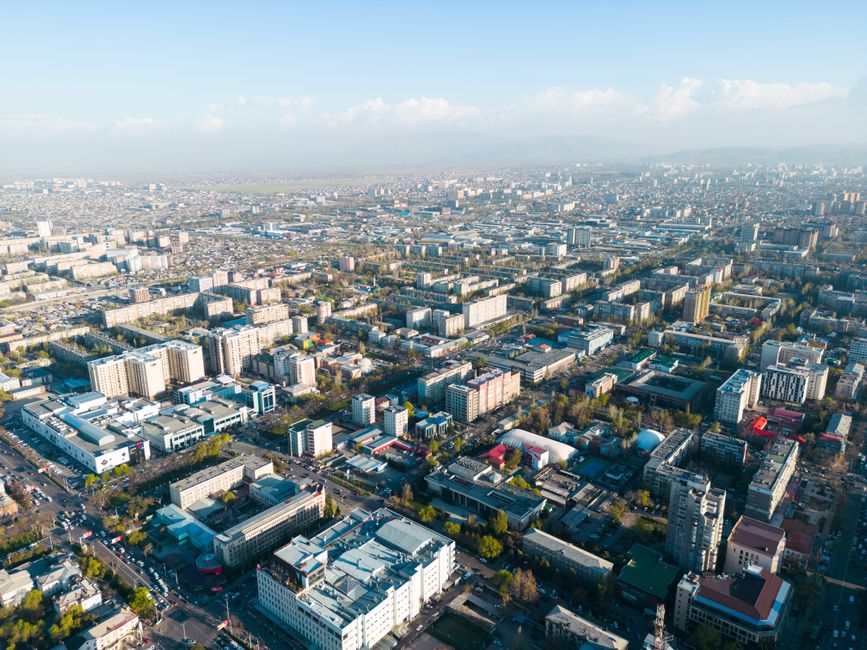
Photo: Collab Media / Pexels
Kyrgyzstan is consistently the entry point of the budget conversation. The approximate all-in six-year cost is ₹20–35 lakh, among the lowest anywhere for an English-medium MBBS.
Medium of instruction: English (with local language taught for patient interaction).
Honest pro: Genuinely low tuition and living costs — hostel, food and transport in Bishkek or Osh cost far less than in most Indian metros.
Caution: Quality varies sharply between universities, and some campuses have seen sudden intake surges of Indian students that strain faculty and clinical exposure. Vet the specific college, not the country. See our Kyrgyzstan page for details.
2. Uzbekistan — Approx. ₹25–40 Lakh Total
Uzbekistan has grown quickly as a destination since it opened up to Indian students. The approximate total cost is ₹25–40 lakh for the full programme.
Medium of instruction: English at universities admitting international students.
Honest pro: Government-backed medical universities in Tashkent and Samarkand keep costs low, and direct flights to India make travel simple.
Caution: The Indian-student pipeline here is newer than in Russia or Kyrgyzstan, so there is a shorter track record of FMGE outcomes to judge colleges by. Ask universities for verifiable graduate data. More on our Uzbekistan page.
Planning MBBS abroad?
Get a free counselling call — we'll shortlist NMC-approved universities for your NEET score and budget.
3. Kazakhstan — Approx. ₹25–45 Lakh Total
Kazakhstan sits in the same Central Asian budget band, with an approximate total cost of ₹25–45 lakh across six years.
Medium of instruction: English for international batches.
Honest pro: Larger cities such as Almaty and Astana offer better hospital infrastructure than many peer budget destinations, at similar living costs.
Caution: Winters are severe, and outside the international programme, hospital work runs in Kazakh and Russian — you must invest in the local language to get real clinical exposure. Compare colleges on our Kazakhstan page.
4. Russia — Approx. ₹30–60 Lakh Total
Russia remains the most established budget destination, with decades of Indian graduates. The approximate total cost is ₹30–60 lakh, depending heavily on the city and university.
Medium of instruction: English-medium programmes are widely offered; several strong universities teach partly or fully in Russian.
Honest pro: Long institutional experience with Indian students and some of the oldest, best-equipped state medical universities in the budget bracket.
Caution: "English-medium" sometimes becomes bilingual by the clinical years, and patient interaction is in Russian everywhere — students who skip the language struggle in hospitals and later in FMGE preparation. Details on our Russia page.
5. Armenia — Approx. ₹30–50 Lakh Total
Armenia is a smaller but steadily popular option, with an approximate total cost of ₹30–50 lakh.
Medium of instruction: English for international students.
Honest pro: Yerevan is compact, safe and affordable, and the small number of medical universities makes the shortlist simple to research thoroughly.
Caution: Limited seats and a small hospital network mean clinical exposure depends heavily on which university you join — visit or video-verify facilities before committing. See our Armenia page.
6. Georgia — Approx. ₹35–60 Lakh Total
Georgia costs a little more than Central Asia but is often preferred for its environment. The approximate total cost is ₹35–60 lakh.
Medium of instruction: English.
Honest pro: Tbilisi and Batumi are safe, student-friendly cities with a European feel, and universities here have an established international-student system.
Caution: It is not the cheapest on this list, and aggressive agents sometimes quote only tuition while hiding Georgia's higher living costs — budget the full picture. Read our Georgia page.
7. Egypt — Approx. ₹35–60 Lakh Total
Egypt is an underrated option with genuinely large teaching hospitals. Expect an approximate total cost of ₹35–60 lakh at universities admitting international students.
Medium of instruction: English (Arabic needed for patient interaction).
Honest pro: High patient volumes in Cairo and Alexandria hospitals give hands-on clinical exposure that many smaller budget destinations cannot match.
Caution: Admission processes and fee structures are less standardised for foreigners than in Central Asia, so paperwork takes patience — work only with the university's official channels. More on our Egypt page.
8. Belarus — Approx. ₹30–50 Lakh Total
Belarus offers a Soviet-legacy state university system similar to Russia's, with an approximate total cost of ₹30–50 lakh.
Medium of instruction: English-medium divisions exist; local instruction is in Russian.
Honest pro: State medical universities with long histories and low, stable tuition.
Caution: Geopolitical isolation affects flights, banking and money transfers for Indian families — factor in the practical friction, not just the fee sheet.
9. Bangladesh — Approx. ₹45–70 Lakh Total
Bangladesh is not the cheapest option on this list, but it earns its rank on value. The approximate total cost is ₹45–70 lakh, mostly payable in structured instalments.
Medium of instruction: English, with a curriculum closely modelled on the Indian MBBS pattern.
Honest pro: The near-identical curriculum, similar disease profile and Bengali/Hindi-adjacent patient environment historically translate into stronger FMGE preparation than most destinations.
Caution: Good government-affiliated colleges are competitive and seat-limited for foreigners; the cheaper private colleges vary widely in quality. Compare options on our Bangladesh page.
10. Nepal — Approx. ₹50–75 Lakh Total
Nepal is the most expensive country in this ranking — an approximate total cost of ₹50–75 lakh — yet it stays on genuine "affordable" lists because of what the money buys.
Medium of instruction: English.
Honest pro: No visa hassles for Indians, an Indian-style curriculum, and patients you can talk to in Hindi from day one — a real advantage for clinical learning and later FMGE performance.
Caution: Seats for Indian students are limited and admissions are entrance-regulated, so it is not a fallback option you can walk into late in the cycle. See our Nepal page.
A note on what is missing. You may notice popular names absent from this ranking. The Philippines follows a different BS-plus-MD structure that Indian students must evaluate carefully against NMC course-duration norms, while destinations such as Georgia's pricier private colleges, Turkey and much of Eastern Europe sit in a distinctly higher cost band. This list is deliberately restricted to countries where a genuinely budget-priced, NMC-compliant pathway exists today — not every country an agent may pitch to you.
Master Comparison Table
| Country | Approx. Total 6-Year Cost* | Medium | Key Note |
|---|---|---|---|
| Kyrgyzstan | ₹20–35 lakh | English | Cheapest band; college quality varies sharply |
| Uzbekistan | ₹25–40 lakh | English | Fast-growing; shorter FMGE track record |
| Kazakhstan | ₹25–45 lakh | English | Better city infrastructure; harsh winters |
| Russia | ₹30–60 lakh | English/Russian | Most established; Russian needed for wards |
| Armenia | ₹30–50 lakh | English | Small, safe; limited hospital network |
| Georgia | ₹35–60 lakh | English | Student-friendly; higher living costs |
| Egypt | ₹35–60 lakh | English | Big teaching hospitals; slower paperwork |
| Belarus | ₹30–50 lakh | English/Russian | Low fees; travel and banking friction |
| Bangladesh | ₹45–70 lakh | English | Indian-style curriculum; strong FMGE fit |
| Nepal | ₹50–75 lakh | English | No visa, Hindi patients; limited seats |
*All figures are approximate, include tuition plus typical living costs, and vary by university and exchange rate. Verify directly with the university.
How to Judge "Affordable" Honestly

Photo: kaboompics.com / Pexels
A fee quote is not a cost. Before calling any option cheap, run it through three filters.
1. Total cost, not tuition. Add hostel, food, flights, insurance, visa renewals and one emergency trip home per year. A "₹15 lakh package" in an agent's brochure routinely becomes ₹25–30 lakh in lived reality. Ask for a written year-by-year breakup.
2. NMC compliance. Under the NMC's Foreign Medical Graduate Licentiate Regulations (2021), your course must meet conditions including a minimum duration, English-medium instruction, an internship at the same institution, and eligibility to practise in that country. A degree that fails these tests is worthless in India at any price. Note that the NMC replaced the former Medical Council of India (MCI) in 2020 — treat any consultant still promising "MCI-approved" colleges with suspicion.
3. FMGE outcomes. Every rupee saved is lost if you cannot clear the FMGE. Pass rates differ enormously between colleges within the same country. Ask universities for verifiable graduate numbers, and speak to seniors who actually sat the exam — not just the ones featured in marketing videos.
4. Who is quoting the price. Agents earn commissions per admission, which is why the same college appears at three different "package prices" from three consultants. Cross-check every figure against the university's own fee notification, pay tuition only to official university accounts, and insist on receipts for each payment.
The honest summary: Central Asia wins on price, while Bangladesh and Nepal cost more but align better with Indian medical practice. The right answer depends on your budget ceiling and your discipline as a student — not on the lowest number in an advertisement.
FAQs
Q1: Which country has the cheapest MBBS abroad for Indian students? A: Kyrgyzstan currently has the lowest approximate total cost, at roughly ₹20–35 lakh for the full course including living expenses. Uzbekistan and Kazakhstan sit just above it. Remember these are approximate ranges — confirm current fees with the university itself.
Q2: Is NEET compulsory for MBBS abroad? A: Yes. NEET qualification is mandatory for Indian students taking admission to any foreign medical university if they intend to practise in India. There is no legitimate route around it.
Q3: Do I still have to clear FMGE, or has NExT replaced it? A: FMGE is still the operative screening exam for foreign medical graduates. The NExT exam has been proposed but stands deferred — it has not replaced FMGE. Plan your preparation around FMGE and track official NMC notifications for any change.
Q4: Is the cheapest option always the best choice? A: No. A low fee at a college with weak clinical training often costs more in the end — through failed FMGE attempts and lost years. Judge total cost, NMC compliance and graduate outcomes together.
Q5: Are these fee figures exact? A: No — every figure in this article is an approximate range covering tuition plus typical living costs. Fees change with exchange rates and university revisions, so treat these as planning bands and verify the exact current fee with the university's official office before paying anything.
Get Free Expert Guidance
Our FMGE-qualified counselors will help you choose the right university based on your NEET score and budget.
No spam. Your data is secure. We call during 9 AM - 8 PM IST.
Frequently Asked Questions
About the Author
Neha Tripathi
Neha Tripathi is a content writer at iAMBBS, focused on MBBS-abroad guidance for Indian students — covering NMC-approved universities, fees, FMGE, and admissions.