
Top 5 vs Bottom 5 MBBS Abroad Universities 2026: Honest Guide
Neha Tripathi
Author
Share this article
Every admissions season, thousands of Indian students search for the top 5 vs bottom 5 universities for MBBS abroad — and most of what they find is either an agent's sales pitch or a list nobody can verify. This guide takes a different route. Instead of a ranking built on numbers no one can check, it shows you what genuinely separates a strong MBBS-abroad university from a poor one, names real examples on the strong side, and describes the warning signs of the weak side — so you can test any university an agent pitches to you, in any country.
One promise upfront: nothing here is invented. Where a figure cannot be verified, we say so, and we show you how to check it yourself.
🩺 Confused about MBBS abroad? Book free counselling with our experts, find colleges for your NEET score with the MBBS College Predictor, or calculate your total cost.
Why "Top 5 vs Bottom 5" Lists Usually Mislead
There is no official ranking of foreign medical universities for Indian students. The National Medical Commission (NMC) — which replaced the Medical Council of India in 2020 — does not rank foreign colleges, and it does not publish an "approved universities" list either. It publishes eligibility criteria that you, the graduate, must meet. Any list claiming to be "NMC's top 5" is a marketing invention.
Global rankings such as QS or Times Higher Education mostly measure research output, which tells you little about whether a first-year Indian student will get good anatomy teaching and real patients in the wards.
And the "bottom 5"? Articles that name specific "worst universities" almost always either fabricate the list or copy someone else's fabrication. What actually exists is a set of red-flag patterns — and once you know them, you can spot a weak university faster than any list can.
The Six Factors That Separate Strong from Weak
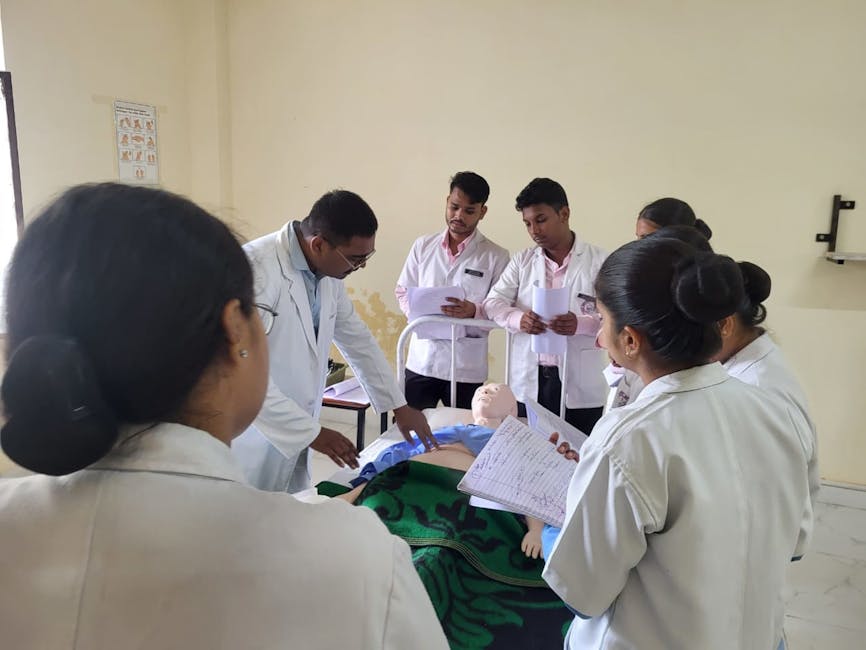
Photo: A K G Group Of Colleges / Pexels
Judge every university — in Russia, Georgia, Uzbekistan, the Philippines or anywhere else — against these six checkable factors.
1. Recognition you can verify. The university must appear in the World Directory of Medical Schools (WDOMS), and it must be recognised by its own country's health ministry or medical regulator. Both are checkable online in minutes.
2. Genuinely English-medium teaching. Some universities teach in English on paper but drift into the local language after the second year, especially during clinical postings. Ask senior Indian students there — not the agent — whether lectures, exams and ward rounds actually run in English for the full course.
3. A real teaching hospital. Strong universities have attached hospitals with steady patient flow, and clinical exposure that starts by the third year. Weak ones rent occasional hospital slots, so students reach final year having barely touched a patient.
4. An honest FMGE picture. Graduates must clear the FMGE (Foreign Medical Graduate Examination), conducted by NBEMS twice a year with a pass mark of 150 out of 300. Overall pass percentages across all countries have stayed persistently low — in most sessions, fewer than one in three candidates cleared it. Be suspicious of any precise "FMGE pass rate" an agent quotes for a specific university: NBEMS does not regularly publish current college-wise results, so most such figures cannot be sourced.
5. Transparent total cost. A strong university publishes its fee schedule on its own website, in its own currency. A weak one quotes fees only through agents, and the number changes after you land.
6. Safety and stability. The disruption faced by students in Ukraine after February 2022 showed how quickly geopolitics can interrupt a six-year course. Country stability belongs in your shortlist criteria, not as an afterthought.
Planning MBBS abroad?
Get a free counselling call — we'll shortlist NMC-approved universities for your NEET score and budget.
What the NMC Actually Requires
Under the NMC's Foreign Medical Graduate Licentiate Regulations, 2021, your foreign degree counts in India only if the course ran at least 54 months, was taught in English, was followed by a 12-month internship at the same institution, and left you eligible to register as a doctor in that country itself. You must also have qualified NEET before joining.
Two clarifications worth repeating, because agents get both wrong. First, the licensing exam for foreign graduates today is the FMGE — the proposed NExT exam has been deferred and is not replacing FMGE in the near term. Second, the regulator is the NMC; "MCI approval" no longer exists. If a brochure still says "MCI-approved", that alone tells you how current its information is.
You can read the full screening-exam process in our FMGE guide.
Universities That Genuinely Hold Up for Indian Students

Photo: George Pak / Pexels
The universities below are long-established, WDOMS-listed institutions with substantial Indian student communities and English-medium MBBS programmes. They are examples of what a defensible shortlist looks like — not a ranking, and not a guarantee.
- Sechenov First Moscow State Medical University and Kazan State Medical University — two of Russia's oldest and most reputed government medical schools, with large teaching-hospital networks.
- Tbilisi State Medical University — Georgia's flagship state medical university, teaching international students in English for decades.
- Vitebsk State Medical University — a well-known Belarusian state university with a long history of training foreign medical graduates.
- University of Debrecen — a major Hungarian public university whose English-language medical programme draws students from across Europe and Asia, inside the EU system.
- Davao Medical School Foundation — an established Philippine institution where the medium of instruction is English throughout, in a country whose curriculum follows the US-style MD pattern.
Notice what this list does not claim: no invented global ranks, no unverifiable pass rates, no "guaranteed" outcomes. Even at a strong university, clearing FMGE depends chiefly on your own preparation across the six years. What these institutions offer is the raw material — recognition, real patients, functioning faculty — that makes serious preparation possible. You can compare hundreds of profiles, country by country, on our universities directory.
Red Flags of a Poor-Choice University
Rather than naming institutions, here are the patterns that should make you walk away — each one describes real behaviour reported by students across multiple countries.
- Admission "guarantees". Any university (or agent) promising guaranteed admission, guaranteed FMGE clearance, or "100% success" is selling something no honest institution can promise.
- Agent-only existence. If you cannot find the university's own working website, its fee schedule, or its WDOMS entry — and every road leads back to a consultancy — stop.
- English-medium on paper only. Programmes that switch to the local language mid-course leave students unable to follow clinical teaching in the years that matter most.
- No attached hospital. A medical college without dependable access to patients produces graduates who have memorised medicine but never practised it.
- No graduated batch yet. Very new private colleges may be legitimate, but you would be the experiment. With a six-year, ₹30-lakh-plus decision, let someone else be first.
- Fee opacity. Fees quoted only in "package" form through agents, hostel charges that appear after arrival, and "one-time" costs that recur — all classic signs.
- Unstable location. Check your own government's travel advisories, not the agent's reassurance.
Strong Choice vs Poor Choice: Side-by-Side
| Factor | Strong university | Poor-choice university |
|---|---|---|
| WDOMS listing | Listed; entry matches the official name | Missing, or listed under a different name |
| Medium of instruction | English for all six years, verifiable from students | English "on paper"; local language creeps in |
| Clinical exposure | Attached teaching hospital; rotations from mid-course | Rented or occasional hospital access |
| Fee transparency | Published on the university's own website | Quoted only via agents; changes after arrival |
| Track record | Decades of graduates, including Indian alumni | No graduated batch, or unverifiable claims |
| Marketing tone | Admission criteria and deadlines | "Guaranteed" admission or exam success |
| Local recognition | Recognised by the country's own regulator | Ambiguous or unverifiable local status |
How to Verify Any University Yourself in One Evening

Photo: Armin Rimoldi / Pexels
- Search WDOMS. Open the World Directory of Medical Schools and search the exact university name. No entry, no application.
- Check local recognition. Find the health ministry or medical council of that country and confirm the university appears on its recognised list.
- Open the university's own website. Look for the English-medium programme page and a published fee schedule. Note the official fee for later comparison with what any agent quotes you.
- Find current Indian students. Senior-batch students found through your own networks — not contacts supplied by an agent — will tell you the truth about language, hostels and hospitals.
- Cross-check every number. If someone quotes a rank, a pass rate, or a fee, ask for the source. If the source is "our internal data", treat the number as decoration.
An evening of this work filters out most poor choices before you have spent a rupee.
FAQs
Q1: Does the NMC publish a list of approved foreign universities? A: No. The NMC sets eligibility criteria for foreign medical graduates; it does not maintain an approved-universities list. Verify WDOMS listing and local recognition instead, and be wary of brochures claiming "NMC approval".
Q2: Is NExT replacing the FMGE for foreign graduates? A: Not at present. The NExT exam has been deferred, and the FMGE — conducted by NBEMS with a 150/300 pass mark — remains the screening test for foreign medical graduates in India.
Q3: Do low fees automatically mean a poor university? A: No. Several long-established state universities in Russia, Georgia and Central Asia charge modest fees because they are publicly funded. The red flag is not a low fee — it is an unpublished, agent-controlled fee.
Q4: Is NEET compulsory for MBBS abroad? A: Yes. Qualifying NEET is mandatory for Indian students joining a foreign MBBS programme, and it remains relevant when you return for licensing.
Q5: Will choosing a "top" university guarantee I clear FMGE? A: No university can guarantee that. A strong university gives you recognition, English-medium teaching and real clinical exposure; converting that into an FMGE pass is six years of your own work. Choosing between universities abroad is less about finding a magic top-5 list and more about refusing to compromise on six verifiable factors. Hold every option — however glossy its brochure — to that standard, and the weak choices eliminate themselves.
📍 Planning your MBBS in russia? Our complete guide covers every NMC-approved university, real fees, FMGE pass rates and the step-by-step admission process.
Read the complete MBBS in russia guide →Get Free Expert Guidance
Our FMGE-qualified counselors will help you choose the right university based on your NEET score and budget.
No spam. Your data is secure. We call during 9 AM - 8 PM IST.
Frequently Asked Questions
About the Author
Neha Tripathi
Neha Tripathi is a content writer at iAMBBS, focused on MBBS-abroad guidance for Indian students — covering NMC-approved universities, fees, FMGE, and admissions.