
Marks NEET 2026: MBBS Abroad Options
Neha Tripathi
Author
Share this article
🎯 Free tool: Not sure which college suits your NEET score? Try our MBBS College Predictor, calculate your total cost, or book free counselling with our experts.
NEET 2026 Score 400-500: Understanding Your MBBS Abroad Options
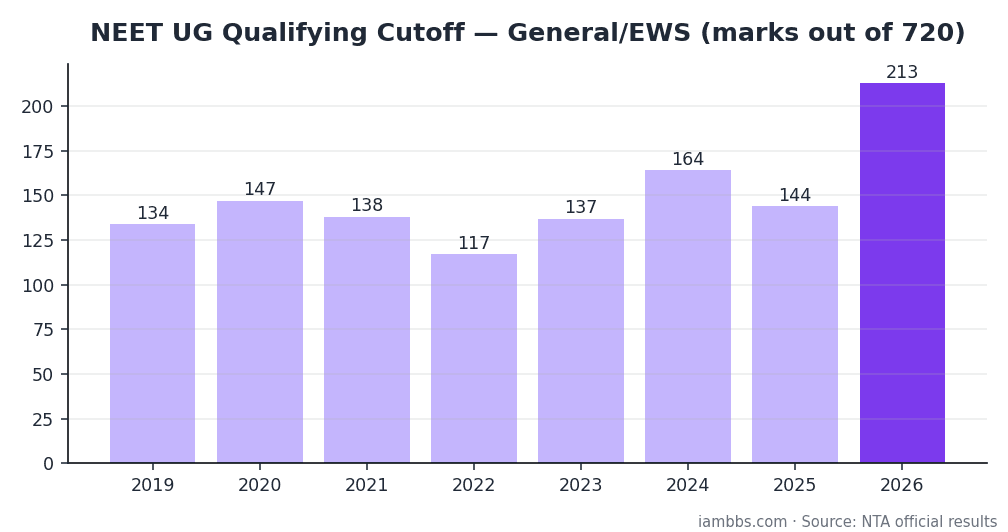
Only qualifying marks, such as 213 for General/EWS category students in 2026, are legally required by the NMC to study MBBS abroad. However, students scoring 400-500 in NEET 2026 often find themselves in a unique position where they can access top-tier global universities without the extreme cost of Indian private colleges.
Most students believe a high score is mandatory for foreign admission, but it isn't. You'll find that universities in Georgia or Kazakhstan prioritize your NEET qualification over a specific 400+ bracket. With NEET 2026 results declared on 16 July, your focus should now shift to universities with proven FMGE success rates.
The real challenge isn't getting in, but getting back. While you've cleared the 400-500 mark, your focus must shift to universities with proven FMGE success rates. For example, Kazan State Medical University in Russia showed a 23.61% pass rate in 2020, while others like Astrakhan State Medical University recorded 0.0% for the same period.
Don't let a high NEET score make you complacent about university selection. You should verify if the curriculum aligns with NMC guidelines to ensure your degree remains valid for the NExT exam. A score of 450 doesn't guarantee a license; only a degree from a recognized institution and a passing FMGE score do.
Top MBBS Abroad Universities for NEET Qualifiers (High FMGE Rate)
Which universities offer the best balance of affordability and FMGE success for students with a 400-500 NEET score? Data from the 2020 FMGE cycle shows that pass rates vary wildly, with some institutions like Kazan State Medical University achieving 23.61% while others remain at 0%.
| Rank | University Name | Country | Course Duration | Total Fees (₹ Lakh) | Avg FMGE Pass Rate (Last 3 Years) | Key Highlights |
|---|---|---|---|---|---|---|
| 1 | Tbilisi State Medical University | Georgia | 6 Years | 35-45 lakh | 50.0% | High clinical exposure in Tbilisi |
| 2 | University of Georgia | 6 Years | 30-40 lakh | 50.0% | Modern infrastructure and labs | |
| 3 | David Tvildiani Medical University | Georgia | 6 Years | 40-50 lakh | 50.0% | Strong focus on USMLE patterns |
| 4 | Astana Medical University | Kazakhstan | 5 Years | 20-30 lakh | 30.0% | Central Asia's top research hub |
| 5 | Kazan State Medical University | Russia | 6 Years | 25-35 lakh | 23.61% | Strong academic reputation in Russia |
| 6 | Georgian American University | Georgia | 6 Years | 30-40 lakh | 20.63% | English medium instruction focus |
| 7 | Semey Medical University | Kazakhstan | 5 Years | 18-25 lakh | 19.54% | Affordable tuition and low living cost |
| 8 | Bashkir State Medical University | Russia | 6 Years | 22-30 lakh | 18.37% | Large Indian student community |
| 9 | Karaganda Medical University | Kazakhstan | 5 Years | 15-22 lakh | 13.55% | High volume of Indian graduates |
| 10 | Petre Shotadze Tbilisi Medical Academy | Georgia | 6 Years | 30-40 lakh | 12.5% | Strong emphasis on basic sciences |
| 11 | National Center for Surgery | Georgia | 6 Years | 35-45 lakh | 10.29% | Advanced surgical training modules |
| 12 | Altai State Medical University | Russia | 6 Years | 20-28 lakh | 10.04% | Low cost of living in Siberia |
| 13 | Kazakh Russian Medical University | Kazakhstan | 5 Years | 20-30 lakh | 8.16% | Dual language teaching options |
| 14 | Northern State Medical University | Russia | 6 Years | 20-28 lakh | 8.89% | Strong community medicine focus |
| 15 | Voronezh State Medical University | Russia | 6 Years | 22-30 lakh | 6.9% | Established Russian medical faculty |
Students should prioritize universities with pass rates above 20% to ensure a smoother transition back to Indian medical practice. We recommend focusing on Georgia and Kazakhstan for higher historical success rates compared to several Russian state universities.
Note: Fees and data are sourced from official websites and may vary. Verify with the university directly.
Planning MBBS abroad?
Get a free counselling call — we'll shortlist NMC-approved universities for your NEET score and budget.
NMC Guidelines & Eligibility Criteria for MBBS Abroad 2026
Most students assume they need a high score like 400 or 500 to study medicine overseas, but they don't. According to NMC rules, you only need to meet the minimum qualifying percentile, which is 213 marks for General/EWS and 177 for OBC/SC/ST categories in 2026.
- NEET Qualification: You must qualify NEET UG 2026—result declared on 16 July—to be eligible for admission and subsequent registration with the National Medical Commission. This is a non-negotiable requirement for any Indian citizen intending to practice medicine in India.
- Category-wise Cutoffs: Eligibility is based on the 50th percentile for General/EWS candidates and the 40th percentile for OBC/SC/ST categories. These specific cutoffs ensure a baseline of academic competency before students move abroad.
- Course Duration: The MBBS program must be at least 54 months in duration, including a mandatory internship. Degrees shorter than this period are not recognized for the FMGE/NExT licensing exams.
- Medium of Instruction: The entire course must be taught in English. If you choose a university where the first 1-2 years are in a local language (like Russian or Georgian), you must ensure the clinical years are in English.
- Medical Internship: A compulsory 12-month internship in a hospital recognized by the foreign university is required. This practical experience is a prerequisite for appearing in the FMGE.
- University Recognition: The foreign medical university must be recognized by the health authorities of that country and follow NMC guidelines. We recommend verifying the university's status on the official NMC portal before applying.
- Age Requirement: You must have completed 17 years of age by December 31, 2026. This aligns with the standard eligibility for 12th-grade completion in India.
- Academic Prerequisites: You need a minimum of 50% marks in Physics, Chemistry, and Biology (PCB) in your 10+2 board exams. For SC/ST/OBC candidates, this requirement is typically relaxed to 40%.
Failure to adhere to these 2026 NMC guidelines will result in the degree being invalid for practicing medicine in India.
Popular Countries for MBBS Abroad with Good FMGE Rates
In 2026, students with a NEET score of 400-500 typically target Georgia, Kazakhstan, and Russia due to their established medical infrastructures. Data from 2020 shows that specific universities in these regions, such as Kazan State Medical University, achieved FMGE pass rates as high as 23.61%.
Georgia is often preferred for its high success rates in smaller batches. For instance, David Tvildiani Medical University and the University of Georgia both recorded 50.0% FMGE pass rates in 2020. We've noticed that students prefer these options when they prioritize clinical exposure over lower tuition costs.
Kazakhstan offers a balanced approach with universities like Astana Medical University, which hit a 40.0% pass rate in 2020. Karaganda Medical University also shows consistent trends, with an 18.4% pass rate in 2019 and 8.7% in 2020. It's a viable alternative for those who find Georgian costs too high.
| Country | University Name | FMGE Pass Rate (2020) | Number of Candidates (Passed/Total) |
|---|---|---|---|
| Georgia | University of Georgia | 50.0% | 3/6 |
| Georgia | David Tvildiani Medical University | 50.0% | 5/10 |
| Georgia | Tbilisi State Medical University | 50.0% | 1/2 |
| Kazakhstan | Astana Medical University | 40.0% | 2/5 |
| Russia | Kazan State Medical University | 23.61% | 55/233 |
| Georgia | Georgian American University | 20.63% | 13/63 |
| Kazakhstan | Semey Medical University | 17.65% | 3/17 |
| Russia | Bashkir State Medical University | 18.37% | 9/49 |
The numbers here are striking. You'll see that while some Russian universities like Altai State (10.04%) have larger candidate volumes, Georgian institutes often show higher percentage-based success in smaller groups.
Cost of MBBS Abroad: Fee Comparison & Financial Aid
Calculate your total budget carefully as tuition fees for NEET qualifiers typically range from ₹15 lakh to ₹45 lakh per year. Most students with a 400-500 score target Eastern Europe or Central Asia where total course costs often stay under ₹60 lakh.
| University | Country | Tuition Fees (per year) | Living Costs (per year) | Total Estimated Cost (₹ Lakh) | Scholarship/Loan Options |
|---|---|---|---|---|---|
| Kazan State Medical University | Russia | ₹3.5-5 lakh | ₹3-5 lakh | ₹45-60 lakh | Education Loan available |
| Bashkir State Medical University | Russia | ₹3-4.5 lakh | ₹3-5 lakh | ₹40-55 lakh | Merit-based scholarship |
| Altai State Medical University | Russia | ₹2.8-4 lakh | ₹3-5 lakh | ₹38-50 lakh | Education Loan available |
| Voronezh State Medical University | Russia | ₹3.2-4.8 lakh | ₹3-5 lakh | ₹42-58 lakh | Government scholarships |
| North-Western State Medical University | Russia | ₹3-4.2 lakh | ₹3-5 lakh | ₹35-52 lakh | Education Loan available |
| Tbilisi State Medical University | Georgia | ₹5-8 lakh | ₹4-6 lakh | ₹60-85 lakh | University grants |
| David Tvildiani Medical University | Georgia | ₹12-15 lakh | ₹4-6 lakh | ₹1.1-1.4 crore | Private loan options |
| Georgian American University | Georgia | ₹6-9 lakh | ₹4-6 lakh | ₹65-90 lakh | Merit-based scholarship |
| Petre Shotadze Tbilisi Medical Academy | Georgia | ₹5-7 lakh | ₹4-6 lakh | ₹55-80 lakh | Education Loan available |
| Karaganda Medical University | Kazakhstan | ₹3-5 lakh | ₹3-4 lakh | ₹35-55 lakh | Government grants |
| Astana Medical University | Kazakhstan | ₹4-6 lakh | ₹3-4 lakh | ₹45-65 lakh | Education Loan available |
| Semey Medical University | Kazakhstan | ₹2.5-4 lakh | ₹3-4 lakh | ₹30-50 lakh | Merit-based scholarship |
We've noticed that Kazakhstan generally offers the most budget-friendly options for students. Most candidates opt for education loans to cover the ₹30-60 lakh bracket typical of these regions.
Disclaimer: This information is sourced from official websites and may vary.
Step-by-Step Admission Process for MBBS Abroad
Roughly 100% of Indian students must qualify for NEET to be eligible for an MBBS seat abroad as per NMC guidelines. After NEET UG 2026 results were declared on 16 July, students with a qualifying score can fast-track applications to high-FMGE rate universities in Georgia or Kazakhstan.
- NEET Qualification: Secure the minimum qualifying percentile in NEET 2026, which was 144 marks for the General category in 2025.
- University Shortlisting: Select an NMC-compliant university based on FMGE pass rates, such as Kazan State Medical University which showed a 23.61% pass rate in 2020.
- Document Preparation: Gather your 10th and 12th mark sheets, NEET 2026 scorecard, and a valid passport for the visa application.
- Application Submission: Submit the admission form to the chosen university to receive an admission letter, typically required for the student visa.
- Apostille and Attestation: Get your academic documents apostilled by the Ministry of External Affairs (MEA) to ensure they are legally recognized in countries like Russia or Georgia.
- Visa Processing: Apply for a student visa at the respective embassy using the university's invitation letter and proof of financial funds.
- University Enrollment: Complete the final registration at the campus and pay the first-year tuition fee to secure your seat.
We recommend starting this process immediately after the NEET 2026 results are declared to avoid last-minute visa delays.
Will I be able to clear the FMGE/NExT after completing my MBBS abroad?
The FMGE pass rate varies significantly by university, with some Georgian institutions reporting a 50% success rate while others in Russia fall below 10%. For students with a 400-500 NEET score, choosing a university with a proven track record of NBE results is the only way to ensure a return to Indian clinical practice.
| University | Country | Average FMGE Pass Rate (Last 3 Years) | FMGE Coaching Support | Post-FMGE Career Paths |
|---|---|---|---|---|
| Tbilisi State Medical University | Georgia | 50.0% | Integrated Curriculum | MD Specialization / Govt Hospital |
| University of Georgia | 50.0% | Clinical Rotations | Private Practice / MD Specialization | |
| David Tvildiani Medical University | Georgia | 50.0% | NExT Prep Modules | Clinical Research / MD Specialization |
| Astana Medical University | Kazakhstan | 30.0% | Peer-led Study Groups | Govt Medical Officer / MD |
| Kazan State Medical University | Russia | 23.61% | Indian Faculty Support | Private Clinic / MD Specialization |
| Georgian American University | Georgia | 20.63% | Exam-oriented Coaching | MD Specialization / Public Health |
| Bashkir State Medical University | Russia | 18.37% | NMC Guideline Training | Govt Hospital / MD Specialization |
| Karaganda Medical University | Kazakhstan | 18.4% | Clinical Case Studies | MD Specialization / Private Practice |
| Semey Medical University | Kazakhstan | 17.65% | FMGE Mock Tests | Public Health / MD Specialization |
| National Center for Surgery | Georgia | 10.29% | Surgical Focus Training | Surgical Residency / MD |
Data indicates that Georgian universities typically offer higher FMGE success rates compared to Russian counterparts, making them a safer bet for students aiming for Indian licensure.
Note: Fees and data are sourced from official websites and may vary. Verify with the university directly.
Why Choose MBBS Abroad with a 400-500 NEET Score?
Most students believe a 400-500 NEET score is only useful for private colleges in India, but it actually provides a strategic advantage for securing top-tier universities in Georgia or Kazakhstan for the 2026 intake. While the NMC only requires a qualifying score (such as 144 marks for General category students in 2025), a higher score typically indicates a stronger academic foundation for clearing the FMGE.
Students with these scores often avoid the risk of low-tier institutions and instead target universities with proven track records. For instance, Kazan State Medical University in Russia showed a 23.61% FMGE pass rate in 2020, which is significantly higher than many budget-friendly alternatives. You'll find that this score range allows you to be more selective about clinical exposure and faculty quality.
Choosing a high-performing university is critical because the FMGE is the only way to practice in India. We've seen that universities like David Tvildiani Medical University in Georgia achieved a 50.0% pass rate in 2020. This makes the decision to go abroad a calculated move rather than a backup plan.
zan State Medical University showed a strong performance with a 23.61% pass rate in 2020. In contrast, universities like Astrakhan State Medical University recorded a 0.0% pass rate for that year.
Can I practice medicine in India if I study MBBS abroad without qualifying NEET?
No, you cannot practice medicine in India without qualifying NEET. The NMC mandates NEET qualification to appear for the FMGE/NExT exam and obtain a medical license.
Which Georgian university is recommended based on FMGE results?
David Tvildiani Medical University and University of Georgia both recorded 50.0% pass rates in 2020. However, these figures are based on very small candidate pools of 10 and 6 students respectively.
What are the FMGE pass rates for medical universities in Kazakhstan?
Astana Medical University achieved a 40.0% pass rate in 2020, while Karaganda Medical University recorded 8.7% in 2020 and 18.4% in 2019. These stats are sourced from NBE official results.
What happens if I choose a university that doesn't follow NMC guidelines?
Your degree will be considered invalid for practicing medicine in India. The NMC has stated that students from non-recognised institutions are ineligible for the FMGE exam.
How does the NEET requirement for abroad colleges compare to Indian private colleges?
Abroad colleges only require qualifying marks, whereas Indian private MBBS colleges typically require scores between 400-500 marks. Government seats in India generally demand 600+ marks.
Watch: MBBS Options After NEET — India vs Abroad Guide
Q1: Does my NEET score affect MBBS abroad fees? A: No. Foreign universities charge the same tuition whether you scored 400 or 650 — NEET only needs to be qualified for Indian students. A few universities do offer merit-based tuition waivers for higher scorers, so it is worth asking. Country-wise, total costs vary broadly from around ₹20 lakhs to ₹50 lakhs; confirm current fees with the university.
Q2: Can I study MBBS abroad with a NEET score of 400–500? A: Yes, comfortably. NEET is a qualifying requirement for MBBS abroad, not a merit cut-off, and a 400–500 score is well above the qualifying percentile. This range often won't fetch a government MBBS seat in India, which is exactly why students with these scores compare abroad options — prioritise universities with English-medium teaching and verified presence on the official NMC list.
Get Free Expert Guidance
Our FMGE-qualified counselors will help you choose the right university based on your NEET score and budget.
No spam. Your data is secure. We call during 9 AM - 8 PM IST.
Frequently Asked Questions
About the Author
Neha Tripathi
Neha Tripathi is a content writer at iAMBBS, focused on MBBS-abroad guidance for Indian students — covering NMC-approved universities, fees, FMGE, and admissions.