MBBS in Armenia 2026: Fees, Top Universities & NEET Guide
Neha Tripathi
Author
Share this article

Image: Սէրուժ Ուրիշեան (Serouj Ourishian), CC BY-SA 3.0 — via Wikimedia Commons
MBBS in Armenia has quietly become one of the most sensible options for Indian students who want an affordable, fully English-medium, European-style medical education. A complete six-year MD programme (equivalent to MBBS) in Armenia — tuition plus living costs — typically works out to roughly ₹35–50 lakh in total (approximate), which is less than the tuition alone at many private medical colleges in India. Add NMC-recognised universities, a safe and student-friendly capital in Yerevan, and a relatively simple visa process, and Armenia deserves a serious place on your shortlist. This guide covers eligibility, universities, fees, admission steps and — most importantly — what it takes to come back and practise in India.
🩺 Confused about MBBS abroad? Book free counselling with our experts, find colleges for your NEET score with the MBBS College Predictor, or calculate your total cost.
Why Choose Armenia for MBBS?
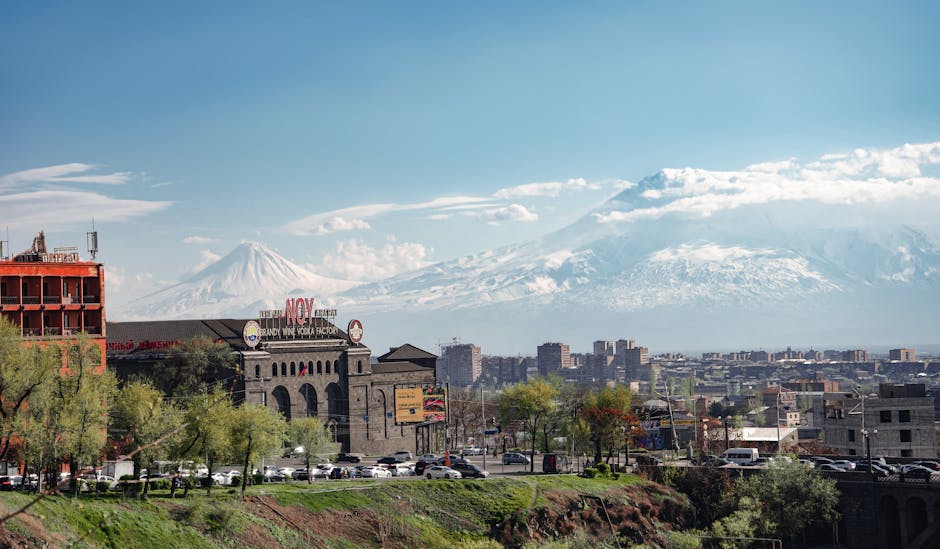
Photo: Arina Dmitrieva / Pexels
Armenia sits in the South Caucasus, at the crossroads of Europe and Asia, and its higher education system follows the Bologna Process — the framework that standardises degrees across Europe.
Here is why Indian students are increasingly choosing it:
- Affordable tuition: Annual fees at most Armenian medical universities fall in the range of US $4,000–7,500 (approximate) — a fraction of Indian private college fees.
- English-medium programmes: The major universities run dedicated English-medium tracks for international students, so there is no language barrier in the classroom.
- No separate entrance exam: Admission is based on your Class 12 marks and NEET qualification. There is no additional university entrance test for most institutions.
- Safe, compact cities: Yerevan is consistently regarded as one of the safer capitals in the region, with a walkable city centre and low street crime.
- Growing Indian community: Indian students already form one of the largest international student groups in Armenia, so hostels, Indian mess facilities and student networks are well established.
For a broader country overview — climate, culture, travel and more — see our detailed Armenia country guide.
Eligibility and NEET Requirements for MBBS in Armenia
The entry requirements are straightforward, but every box must be ticked — especially NEET.
- Age: You must be at least 17 years old on or before 31 December of the admission year.
- Academics: Class 12 (10+2) with Physics, Chemistry and Biology, with a minimum of 50% aggregate in PCB for the general category (typically 40% for SC/ST/OBC).
- NEET: NEET qualification is mandatory. Under National Medical Commission (NMC) rules, no Indian student can pursue medicine abroad — or later register in India — without having qualified NEET. Keep your scorecard safe; it is required at admission, for visa paperwork, and again when you register for the FMGE screening test after graduation.
- Passport: A valid passport is needed for the application and student visa.
One practical tip: universities in Armenia admit primarily for the September/October intake, so ideally start your paperwork by June or July.
Planning MBBS abroad?
Get a free counselling call — we'll shortlist NMC-approved universities for your NEET score and budget.
Top Medical Universities in Armenia

Photo: Sarowar Hussain / Pexels
Stick to institutions that appear in the World Directory of Medical Schools (WDOMS) and meet NMC's requirements. The best-known options for Indian students are:
Yerevan State Medical University (YSMU): The oldest and most prestigious medical university in the country, and a public institution. Its General Medicine programme for international students is taught in English, and it has the largest network of affiliated teaching hospitals in Armenia. Most Indian students aiming for Armenia keep YSMU as their first preference.
University of Traditional Medicine (UTM), Yerevan: A private university offering an English-medium General Medicine programme at a lower fee point than YSMU, popular with budget-conscious international students.
Mkhitar Gosh Armenian-Russian International University: A private university in Yerevan offering medical education for international students at comparatively economical fees.
St. Tereza Medical University, Yerevan: Another private option with an English-medium medicine programme and modest tuition.
| University | Type | Duration | Medium | Approx. tuition/year |
|---|---|---|---|---|
| Yerevan State Medical University | Public | 6 years | English | US $6,000–7,500 |
| University of Traditional Medicine | Private | 6 years | English | US $4,500–5,500 |
| Mkhitar Gosh Armenian-Russian International University | Private | 6 years | English | US $4,000–5,500 |
| St. Tereza Medical University | Private | 6 years | English | US $4,000–5,000 |
Fees are approximate, change year to year, and should always be confirmed on the university's official website or with its admissions office before you pay anything.
MBBS in Armenia: Fees and Living Costs
Armenia is one of the cheaper places in the wider European region to live as a student. Yerevan is noticeably more affordable than most EU capitals.
| Expense head | Approximate cost |
|---|---|
| Tuition fee | US $4,000–7,500 per year |
| Hostel / shared apartment | US $100–300 per month |
| Food and groceries | US $150–250 per month |
| Local transport and utilities | US $50–100 per month |
| One-time visa, travel, insurance | US $1,000–1,500 |
Putting it together, most students spend US $2,500–4,500 per year on living costs on top of tuition. Over the full six years, a realistic total budget is US $40,000–60,000 (roughly ₹35–50 lakh, approximate) depending on the university and your lifestyle.
A note of caution: always pay fees directly to the university through official channels, and get every payment receipted. Avoid agents who quote suspiciously low "package" prices.
Medium of Instruction: English All the Way
The international tracks at Armenian medical universities are taught entirely in English — lectures, textbooks and examinations.
This matters for two reasons. First, it removes the classroom language barrier. Second, NMC's regulations require that your medical course abroad be taught in English for the degree to be acceptable for registration in India, so always enrol in the English-medium stream and get this stated in your admission letter.
That said, patients in Armenian hospitals speak Armenian (and often Russian). Universities teach students basic Armenian in the early years precisely so that clinical interactions from the third year onwards go smoothly. Take those language classes seriously — your clinical learning depends on them.
Admission Process: How to Apply, Step by Step
The process is simpler than for most European countries and runs mostly online.
- Shortlist universities — verify WDOMS listing, English-medium instruction and total cost.
- Apply online with scanned copies of your Class 10 and 12 marksheets, passport, NEET scorecard and photographs.
- Receive the offer/admission letter, usually within a few weeks of a complete application.
- Pay the initial tuition instalment to confirm your seat (only through official university channels).
- Apply for the student visa through the Armenian authorities — the university typically issues an invitation/support letter for this.
- Fly out and enrol — complete registration, medical check and hostel formalities on arrival.
Document tip: get your Class 12 documents apostilled/attested as advised by the university, and carry multiple sets of photocopies.
FMGE, NMC Rules and Returning to India
Photo: Yusuf Çelik / Pexels
This is the section that decides whether Armenia works for you, so read it carefully.
- Your degree must be FMGE-eligible. After graduating, you must clear the Foreign Medical Graduate Examination (FMGE), conducted twice a year by the National Board of Examinations, to get registered and practise in India. Read our complete FMGE guide for syllabus, pattern and preparation strategy.
- FMGE remains the operative screening test. The proposed National Exit Test (NExT) has been deferred and has not replaced FMGE. Until the NMC notifies otherwise, plan your preparation around FMGE.
- Follow the FMG Licentiate Regulations, 2021. The NMC requires that your entire course, clinical training and internship be completed in the same foreign institution, that the course be in English, and that you obtain the licence/registration to practise in the country where you studied. Confirm with your university, in writing, that its programme lets Indian students meet these conditions.
- Choose the university, not just the country. Clinical exposure varies between institutions. A university with strong affiliated teaching hospitals — YSMU being the clearest example — gives you the patient contact hours that FMGE preparation ultimately rests on.
There is no shortcut here: your success in returning to practise in India depends far more on your own clinical learning and FMGE preparation than on which country's stamp is on the degree.
Pros and Cons of Studying MBBS in Armenia
| Pros | Cons |
|---|---|
| Low total cost (₹35–50 lakh approximate for six years) | You must clear FMGE to practise in India |
| English-medium instruction throughout | Patients speak Armenian/Russian — you must learn basic Armenian for clinics |
| European (Bologna Process) education framework | Smaller country with fewer universities to choose from |
| Safe, affordable, student-friendly Yerevan | Cold winters (temperatures well below 0°C) |
| No separate university entrance exam | Direct flights from India are limited; most routes involve one stop |
FAQs: MBBS in Armenia
Q1: Is NEET compulsory for MBBS in Armenia? A: Yes. NEET qualification is mandatory for every Indian student taking admission to a medical course abroad, including Armenia. Without it, you cannot register to practise in India later.
Q2: Is an Armenian medical degree valid in India? A: Yes, provided you study at a university listed in the World Directory of Medical Schools, complete the course in English at a single institution as per NMC's FMG Licentiate Regulations, 2021, and then clear the FMGE screening test.
Q3: How much does MBBS in Armenia cost in total? A: A realistic all-inclusive budget is about US $40,000–60,000 (₹35–50 lakh, approximate) for the full six years — tuition, hostel, food and travel included. Exact figures depend on the university.
Q4: How long is the MBBS (MD) course in Armenia? A: The General Medicine programme runs for six years, including clinical training. Confirm the internship structure with your university so that it satisfies NMC requirements.
Q5: Which is the best medical university in Armenia for Indian students? A: Yerevan State Medical University is the country's oldest and most reputed medical university, with the widest hospital network. Private options such as the University of Traditional Medicine and Mkhitar Gosh Armenian-Russian International University offer lower fees; weigh cost against clinical exposure before deciding.
Q6: Is Armenia expensive for Indians? A: No — Armenia is one of the more affordable European study destinations for Indian students. Tuition is modest by European standards and day-to-day living costs (accommodation, food, transport in Yerevan) are generally lower than in Western Europe, though exact amounts vary with lifestyle, city and the rupee exchange rate. Always budget a realistic monthly buffer and confirm current figures with your university.
Written by Neha Tripathi. Fee figures are approximate and should be verified with universities directly before admission.
📍 Planning your MBBS in armenia? Our complete guide covers every NMC-approved university, real fees, FMGE pass rates and the step-by-step admission process.
Read the complete MBBS in armenia guide →Get Free Expert Guidance
Our FMGE-qualified counselors will help you choose the right university based on your NEET score and budget.
No spam. Your data is secure. We call during 9 AM - 8 PM IST.
Frequently Asked Questions
About the Author
Neha Tripathi
Neha Tripathi is a content writer at iAMBBS, focused on MBBS-abroad guidance for Indian students — covering NMC-approved universities, fees, FMGE, and admissions.