
MBBS in Romania for Indian Students 2026: Fees, NEET, Universities
Neha Tripathi
Author
Share this article
Yes — MBBS in Romania is one of the better-value options for Indian students in 2026. Romania is a full European Union member, its medical universities run a six-year English-medium MD programme (equivalent to MBBS), and the degree qualifies for recognition across the EU under European law. Indian students must have a NEET qualification, but most Romanian universities admit through an application-file (dossier) evaluation rather than a separate entrance exam. Tuition at most universities falls in the approximate range of €5,000–€9,000 per year — well below private medical college fees in India — and graduates can sit the FMGE to practise in India or pursue postgraduate training in Europe.
That is the short answer. The longer answer — who should choose Romania, what it actually costs, which universities matter, and what the degree is worth in India, the EU and beyond — is below.
🩺 Confused about MBBS abroad? Book free counselling with our experts, find colleges for your NEET score with the MBBS College Predictor, or calculate your total cost.
Why Indian Students Choose Romania for MBBS
Romania has quietly become a serious alternative to the usual MBBS-abroad destinations, and the reasons are structural rather than promotional:
- EU member state: Romania joined the European Union in 2007, so its medical degrees sit inside the European higher-education framework (Bologna system, ECTS credits).
- Full Schengen member: Since 1 January 2025, Romania is fully inside the Schengen area, which makes travel across most of Europe straightforward on a Romanian residence permit.
- English-medium MD: The major universities run complete six-year medicine programmes in English for international students.
- No separate entrance exam at most universities: Admission for international applicants is usually based on your 10+2 marks and application dossier; a few universities conduct their own admission test or interview.
- Affordable by EU standards: Both tuition and living costs are among the lowest in the European Union.
| Quick fact | Detail |
|---|---|
| Degree awarded | Doctor of Medicine (MD), equivalent to MBBS |
| Duration | 6 years (12 semesters, 360 ECTS credits) |
| Medium of instruction | English (Romanian taught for patient interaction) |
| Annual tuition | Approx. €5,000–€9,000 (varies by university) |
| NEET | Mandatory for Indian students (NMC requirement) |
| Academic year | Starts around October |
| Currency | Romanian leu (RON); fees usually quoted in euros |
Eligibility for MBBS in Romania: NEET and Academic Requirements
The entry bar is reasonable, but every item below matters because both the university and, later, the National Medical Commission (NMC) will check your file:
- 10+2 with Physics, Chemistry and Biology. Most universities expect a solid PCB score; around 50% is a common working benchmark, though competitive universities effectively demand more because English-section seats are limited.
- NEET qualification. For Indian students who intend to practise in India, qualifying NEET is mandatory under NMC rules. Keep your scorecard safe — it is part of your FMGE eligibility trail later.
- Age. You should be at least 17 by the end of the admission year.
- Documents. Passport, 10th and 12th mark sheets, NEET scorecard, birth certificate, medical fitness certificate and (for the visa stage) proof of funds. Romanian universities also require document recognition through the Romanian Ministry of Education (the CNRED process), which your university or admissions partner will guide you through.
Applications for the October intake generally open in spring and close between June and August, but each university sets its own calendar — apply early, because English-medium seats at the top universities fill quickly.
Planning MBBS abroad?
Get a free counselling call — we'll shortlist NMC-approved universities for your NEET score and budget.
MBBS in Romania Fees for Indian Students (2026)

Photo: Willfried Wende / Pexels
Tuition is set by each university and revised periodically, so treat the figures below as indicative ranges and confirm the current year's fee on the university's official admissions page before paying anything.
| University | City | Approx. annual tuition (English MD) |
|---|---|---|
| Carol Davila University of Medicine and Pharmacy | Bucharest | ~€7,000–€9,000 |
| Iuliu Hațieganu University of Medicine and Pharmacy | Cluj-Napoca | ~€7,000–€9,000 |
| Grigore T. Popa University of Medicine and Pharmacy | Iași | ~€6,000–€8,000 |
| Victor Babeș University of Medicine and Pharmacy | Timișoara | ~€6,000–€8,000 |
| George Emil Palade University of Medicine, Pharmacy, Science and Technology | Târgu Mureș | ~€6,000–€8,000 |
| University of Oradea (Faculty of Medicine) | Oradea | ~€5,000–€7,000 |
| Ovidius University of Constanța (Faculty of Medicine) | Constanța | ~€5,000–€7,000 |
Over six years, tuition alone typically works out to roughly €30,000–€55,000. Depending on the exchange rate, that is broadly in the range of ₹5–8.5 lakh per year — comparable to mid-range MBBS destinations, but with an EU degree at the end of it. There is no large one-time "package" fee structure of the kind some agents advertise; be wary of anyone quoting totals far below these ranges.
Cost of Living in Romania for Indian Students

Photo: Jakub Zerdzicki / Pexels
Romania is one of the cheapest EU countries to live in. Bucharest and Cluj-Napoca cost noticeably more than Iași, Oradea or Constanța, but even the expensive cities are manageable on a student budget.
| Expense | Approx. monthly cost |
|---|---|
| University hostel | €80–€250 |
| Shared private apartment | €250–€450 |
| Food and groceries | €150–€250 |
| Local transport (student pass) | €10–€30 |
| Mobile and internet | €10–€20 |
| Books, misc. and leisure | €50–€100 |
A hostel-based student can realistically live on about €350–€500 a month; budget €500–€700 if you rent privately in Bucharest or Cluj. Student discounts on public transport and rail travel are generous in Romania, and cooking your own food (Indian groceries are available in the bigger cities) keeps costs down further.
Course Duration: The 6-Year English-Medium MD Programme

Photo: Yan Krukau / Pexels
The Romanian medicine programme runs six years — no shortcuts, no "fast-track" versions:
- Years 1–3 (preclinical): Anatomy, physiology, biochemistry, pathology and the other foundation sciences.
- Years 4–6 (clinical): Hospital rotations across internal medicine, surgery, paediatrics, obstetrics and gynaecology, psychiatry and community medicine, ending with a licence examination and thesis.
Two practical points Indian students often miss. First, although the programme is taught in English, universities teach Romanian in the early years because you will need it to take patient histories during clinical rotations — take those classes seriously. Second, the six-year structure (well above the NMC's minimum course-duration requirement) and English medium mean Romanian programmes align well with the NMC's Foreign Medical Graduate Licentiate Regulations, 2021 — but read the latest regulations yourself before enrolling, especially the internship provisions.
Top Medical Universities in Romania for Indian Students
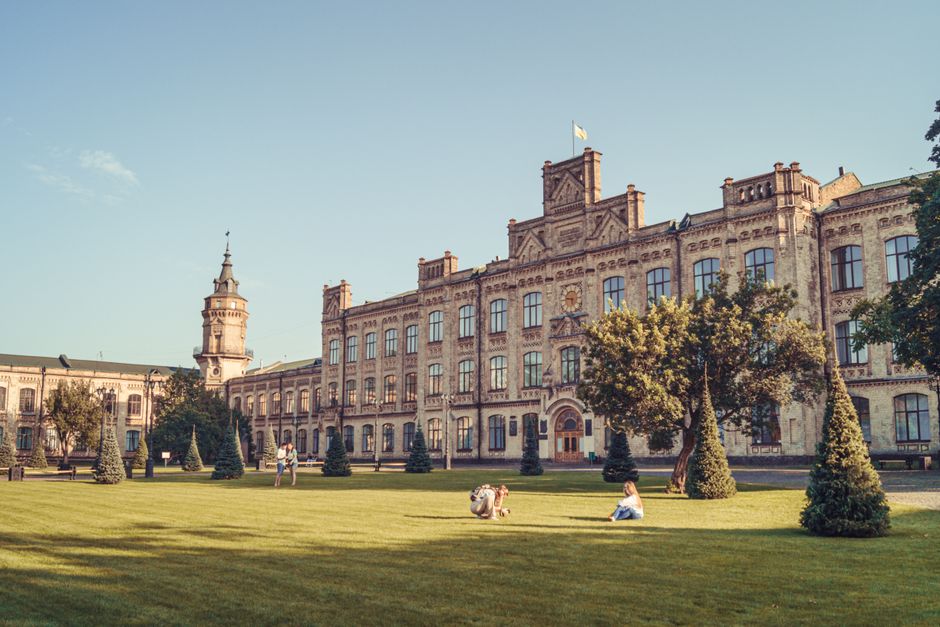
Photo: Nadin Nandin / Pexels
Romania has a cluster of long-established state medical universities, all listed in the World Directory of Medical Schools:
- Carol Davila University of Medicine and Pharmacy, Bucharest — the country's largest and best-known medical university, with a wide hospital network in the capital.
- Iuliu Hațieganu University of Medicine and Pharmacy, Cluj-Napoca — strong academic reputation and a large international-student community in Romania's liveliest student city.
- Grigore T. Popa University of Medicine and Pharmacy, Iași — a major centre in eastern Romania known for clinical exposure and comparatively lower living costs.
- Victor Babeș University of Medicine and Pharmacy, Timișoara — modern facilities and a well-organised English section in western Romania.
- George Emil Palade University, Târgu Mureș — runs a long-standing English-medium medicine track.
- University of Oradea and Ovidius University of Constanța — smaller faculties with lower fees, worth considering if budget is the deciding factor.
You can compare these institutions alongside options in other countries on our universities directory, and see the full country picture on our MBBS in Romania country page.
NMC, FMGE and EU Recognition: What Can You Do After Graduating?
This is where Romania genuinely separates itself from many cheaper destinations.
Practising in India. Romanian medical graduates return to India as foreign medical graduates and must clear the FMGE, which remains the NMC's screening test as of 2026. After passing, you complete the required internship and register with the NMC/State Medical Council. Start FMGE-oriented self-study alongside your Romanian curriculum from the clinical years — our FMGE guide explains the exam pattern, eligibility trail and preparation strategy in detail.
Practising in the EU. Because Romania is an EU member, its basic medical qualification falls under the EU's professional-qualifications framework (Directive 2005/36/EC), which provides for recognition of medical degrees across EU and EEA countries. In practice, that means Romanian graduates can apply for postgraduate training or medical registration in countries such as Germany, France or Ireland — subject to each country's language requirements and registration procedures. This EU pathway simply does not exist for degrees from non-EU destinations.
USA, UK and elsewhere. Romanian universities' listing in the World Directory of Medical Schools means graduates can generally pursue ECFMG certification and the USMLE route for the United States, or the GMC's registration route for the UK. Verify your specific university's status on the World Directory and with the relevant regulator before you apply.
Pros and Cons of MBBS in Romania
Pros
- EU degree with European recognition pathways after graduation
- Six-year English-medium MD at approximately €5,000–€9,000 per year
- No separate entrance exam at most universities — NEET plus a strong dossier is usually enough
- Low, predictable living costs and full Schengen access for travel
- Safe, student-friendly cities with established international communities
Cons
- You must learn functional Romanian for clinical years — unavoidable
- FMGE preparation is entirely self-driven; Romanian universities do not teach to the Indian screening exam
- Winters are cold by Indian standards, and the Indian community is smaller than in the biggest MBBS-abroad hubs
- EU practice routes require serious language investment (German, French, etc.)
FAQs: MBBS in Romania for Indian Students
Q1: Is NEET compulsory for MBBS in Romania? A: Yes. Indian students who intend to practise in India after graduating must have qualified NEET, as per NMC rules. Universities and, later, the FMGE eligibility process will ask for your scorecard.
Q2: How much does MBBS in Romania cost in total? A: Tuition is approximately €5,000–€9,000 per year depending on the university — roughly €30,000–€55,000 over six years — plus living costs of about €350–€700 per month. Always confirm the current fee on the university's official website.
Q3: Is a Romanian MBBS (MD) degree valid in India? A: Yes. Graduates of recognised Romanian medical universities are eligible to appear for the FMGE, and after clearing it and completing the required internship, they can register to practise in India under NMC norms.
Q4: What is the duration of MBBS in Romania? A: Six years, taught in English at the major universities, covering preclinical sciences and full clinical rotations. There is no shorter version of the medicine programme.
Q5: Can I work in Europe after MBBS in Romania? A: Yes, that is one of Romania's biggest advantages. As an EU qualification, a Romanian medical degree is recognised across EU/EEA countries under EU law, so graduates can pursue postgraduate training or registration in Europe — provided they meet the destination country's language and registration requirements.
The Bottom Line
For an Indian student with a qualified NEET score and a budget in the ₹5–8.5 lakh-per-year range, MBBS in Romania offers something rare: a genuine EU medical degree, taught in English, with post-graduation doors open in India, Europe and beyond. The trade-offs — Romanian for clinical work, self-driven FMGE prep, limited English-section seats — are real but manageable with early planning.
Start by shortlisting two or three universities, verify this year's fees and deadlines on their official pages, and browse our Romania country page and universities directory to compare your options side by side. If practising in India is the end goal, read the FMGE guide now, not in your final year — the students who treat the screening exam as a six-year project are the ones who clear it comfortably.
📍 Planning your MBBS in romania? Our complete guide covers every NMC-approved university, real fees, FMGE pass rates and the step-by-step admission process.
Read the complete MBBS in romania guide →Get Free Expert Guidance
Our FMGE-qualified counselors will help you choose the right university based on your NEET score and budget.
No spam. Your data is secure. We call during 9 AM - 8 PM IST.
Frequently Asked Questions
About the Author
Neha Tripathi
Neha Tripathi is a content writer at iAMBBS, focused on MBBS-abroad guidance for Indian students — covering NMC-approved universities, fees, FMGE, and admissions.